
You already know that feeling: your mind racing, your chest tightening, your thoughts spiraling faster than you can catch them. What most people don’t know is there’s a simple, science-backed way to interrupt that spiral in under two minutes, using nothing but your five senses.
In this guide, we’ll walk you through exactly how to use the 5-4-3-2-1 Grounding Technique, step by step, so you always have a tool ready when you need it most.
Key Takeaways
- The 5-4-3-2-1 Grounding Technique is a sensory-based mindfulness exercise that uses sight, touch, hearing, smell, and taste to interrupt anxious thoughts and refocus attention on the present moment.
- The method works by engaging the five senses in a specific countdown sequence, which redirects mental focus away from anxious or spiraling thoughts.
- This technique is commonly used to manage panic attacks, generalized anxiety, PTSD symptoms, and everyday stress.
- Grounding exercises like this one work by activating present-moment awareness, which can help calm an overactive nervous system response.
- No equipment or special training is required, making it accessible for anyone, anywhere, at any time.
- The technique can be adapted for children, people with sensory sensitivities, or situations where one or more senses aren’t available to use.
- Practicing the technique regularly, not just during crises, can make it more effective when it’s needed most.
Table of Contents
What Is the 5-4-3-2-1 Grounding Technique?
The 5-4-3-2-1 Grounding Technique is a sensory-based coping method that helps interrupt anxiety by engaging the five senses in a structured sequence: sight, touch, hearing, smell, and taste.
First, you notice five things you can see. Then you work backward through touch, sound, smell, and finally taste, counting down one sense at a time.
At its core, this exercise belongs to a broader family of practices called grounding techniques, which are rooted in mindfulness and cognitive behavioral therapy techniques (CBT). Grounding exercises pull attention away from anxious internal thoughts and back toward the external, physical world.
For example, a therapist might teach this exact method to a client experiencing panic attacks as a fast, portable “reset button” they can use anywhere.
That being said, the 5-4-3-2-1 method isn’t a cure for anxiety disorders. It’s a coping tool, a way to interrupt an anxious moment long enough to think clearly again. As such, it’s often paired with other strategies like deep breathing exercises for anxiety or longer-term therapy.
Why Does the 5-4-3-2-1 Technique Matter?
Grounding techniques work by shifting attention away from anxious or intrusive thoughts and toward present-moment sensory experiences, which can help calm the body’s stress response.
This matters because anxiety and panic often trap people in a loop of “what if” thinking that has nothing to do with what’s actually happening around them.
Moreover, anxiety disorders are strikingly common. An estimated 19.1% of U.S. adults experienced an anxiety disorder in the past year – Source: National Institute of Mental Health, 2023. That means millions of people are actively searching for fast, accessible tools they can use without a prescription or an appointment.
In addition, grounding exercises are backed by real physiological logic. When the brain is flooded with sensory input from the present moment, it has less bandwidth to keep spinning through worst-case scenarios.
For example, someone counting textures they can feel- a rough sweater, a cool phone case, a smooth desk is, in that moment, physically incapable of also replaying an anxious thought with full intensity. The two processes compete for the same mental resources.
Plus, the technique’s simplicity is part of its power. It doesn’t require an app, a quiet room, or special training- just your senses and a few minutes.
What Are the Five Steps of the 5-4-3-2-1 Method?
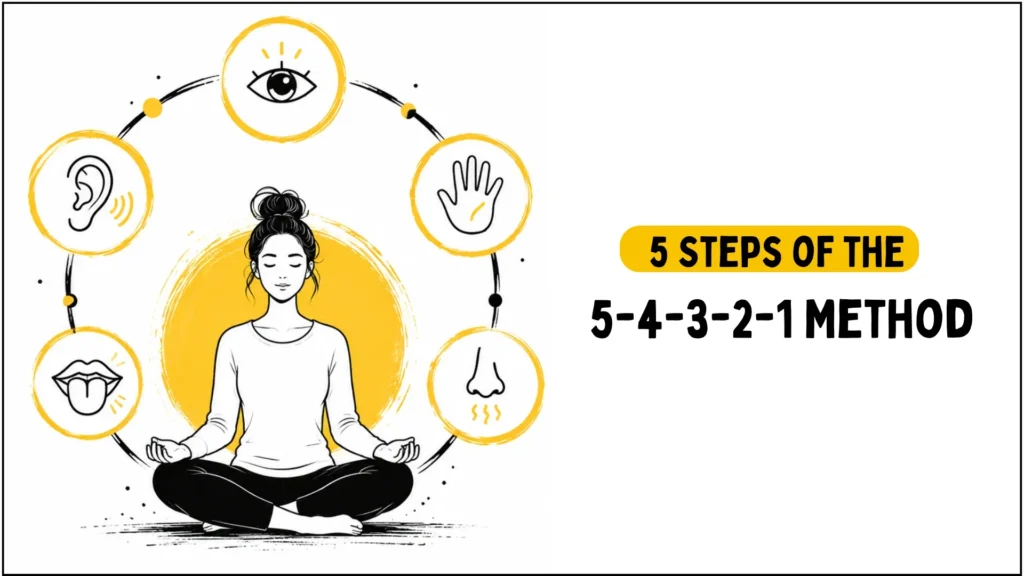
The technique involves identifying 5 things you can see, 4 things you can feel, 3 things you can hear, 2 things you can smell, and 1 thing you can taste, in that order. Let’s break down each step in detail.
Step 1: Name 5 Things You Can See
First, look around and silently (or out loud) name five things in your environment. For example, you might notice a red coffee mug, a crack in the ceiling, sunlight on the floor, a picture frame, and your own hands. The goal isn’t to judge or analyze; just observe and name.
Step 2: Notice 4 Things You Can Feel
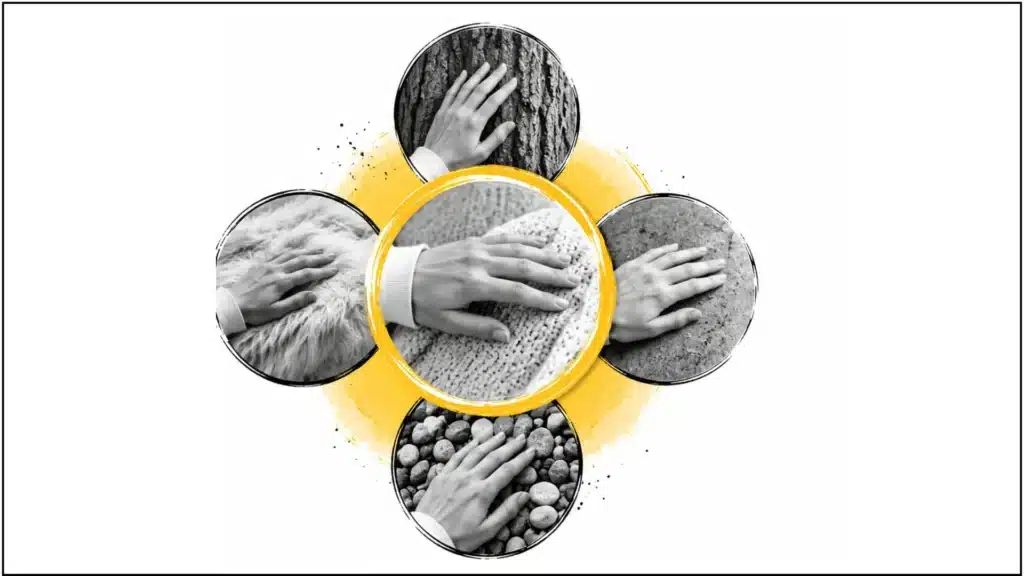
Next, shift attention to physical sensations. This could be the texture of your clothing, the chair beneath you, your feet on the floor, or the temperature of the air. Touch is one of the most immediate ways to anchor yourself in your body.
Step 3: Listen for 3 Things You Can Hear
Then, tune in to sound. You might hear traffic outside, a fan humming, or your own breathing. If your environment is silent, that silence itself counts as one sound to notice.
Step 4: Identify 2 Things You Can Smell
After that, notice two scents nearby: Coffee, fresh air, soap, or laundry detergent. If you can’t detect an obvious smell, you can recall two favorite scents from memory instead.
Step 5: Acknowledge 1 Thing You Can Taste
Finally, focus on one taste: The lingering flavor of your last meal, a sip of water, or a piece of gum. By the time you reach this last step, your attention has moved almost entirely out of anxious thought loops and into your immediate physical experience.
When Should You Use the 5-4-3-2-1 Technique?
You can use the 5-4-3-2-1 technique any time anxious or racing thoughts start to feel overwhelming, including during panic attacks, before stressful events, or as a nightly wind-down ritual. Let’s explore the most common scenarios.
First, this technique is widely used during acute signs of a panic attack, such as a racing heart, shortness of breath, or a sudden wave of fear. Second, it works well for everyday anxiety spikes before a big presentation, a difficult conversation, or a crowded commute. Third, some people use it as a pre-sleep ritual to quiet a busy mind before bed.
Additionally, it’s useful in public settings because it requires no equipment and can be done silently. For example, someone feeling anxious in a meeting can run through the steps mentally without anyone noticing.
Can the 5-4-3-2-1 Technique Help With PTSD or Trauma Symptoms?
The 5-4-3-2-1 method is commonly recommended by therapists as a fast-acting tool for panic attacks, anxiety spikes, and PTSD-related flashbacks. During a flashback, a person’s brain can feel like it’s reliving a past event as though it’s happening right now.
Grounding techniques interrupt that experience by pulling attention firmly back into the present moment and current surroundings.
That said, trauma-related symptoms often benefit from professional support alongside self-help tools. If flashbacks or PTSD symptoms are frequent or distressing, working with a licensed therapist who specializes in trauma can provide additional strategies tailored to your specific experience.
For more on related symptoms, see the guide on PTSD symptoms and triggers.
How Do You Adapt the 5-4-3-2-1 Technique for Children?
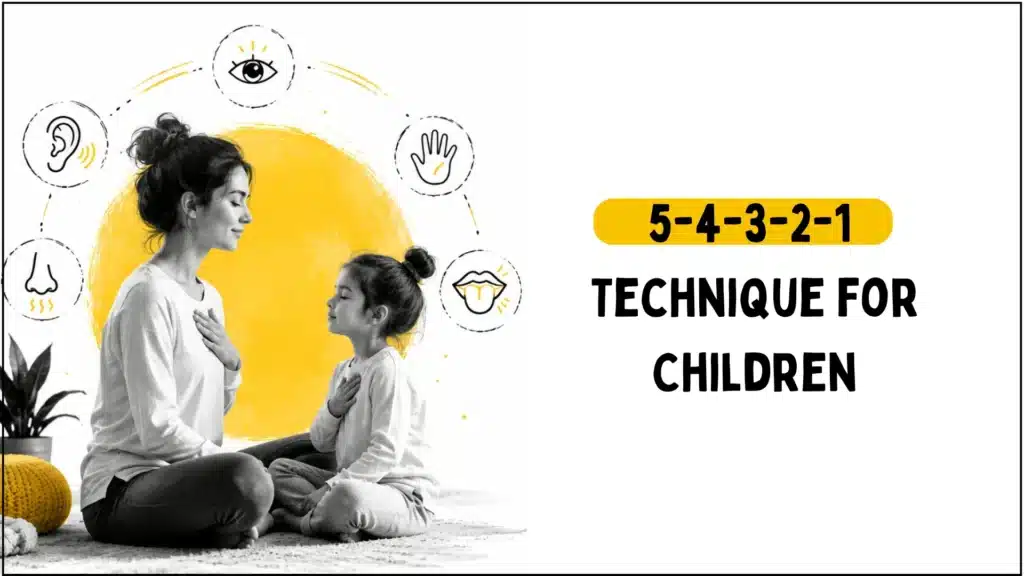
Children often respond well to a simplified, more playful version of the 5-4-3-2-1 technique, using games or storytelling instead of a formal countdown. For example, a parent might turn it into an “I Spy”-style game, asking a child to find five colors in the room instead of five general objects.
At the same time, younger children may struggle with the taste and smell steps, so those can be shortened or skipped entirely for kids under six. As such, some counselors recommend a simplified “3-2-1” version for very young children: three things you see, two things you hear, one thing you feel.
For a deeper dive, check out our guide on grounding techniques for kids.
What Do You Do If You Can’t Use One of the Five Senses?
If a sense is unavailable due to a sensory impairment, environment, or personal preference, you can simply skip that step or replace it with a memory-based alternative.
For example, someone who is blind might replace the “see” step with an additional round of touch or sound. Someone in a scent-free environment could recall two favorite smells from memory instead of detecting real ones nearby.
The flexibility of this method is actually one of its biggest strengths. The exercise doesn’t require perfect sensory access to work; it requires attention. As long as you’re actively engaging with your environment or memory, the grounding effect still applies.
What Tools and Apps Can Support the 5-4-3-2-1 Technique?
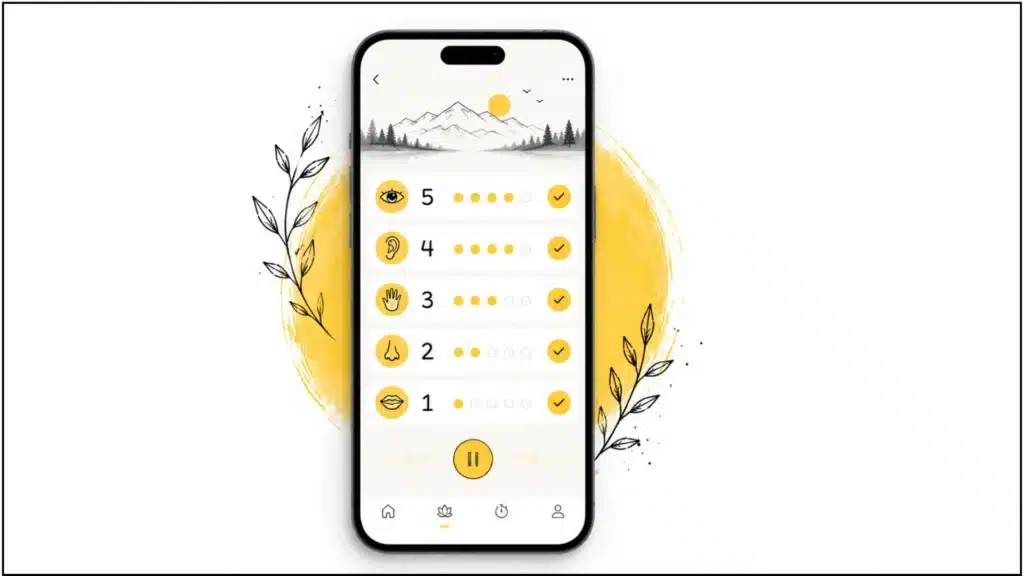
While the 5-4-3-2-1 technique requires no tools at all, several free and paid apps can help you practice consistently and track your progress.
Below is a quick comparison of common options:
| Tool | Type | Best For | Cost |
|---|---|---|---|
| Calm | Mobile app | Guided grounding + sleep content | Free trial/subscription |
| Headspace | Mobile app | Structured mindfulness courses | Free trial/subscription |
| MindShift CBT | Mobile app | CBT-based anxiety tools | Free |
| Notes app / journal | Built-in tool | Writing out the 5-4-3-2-1 steps manually | Free |
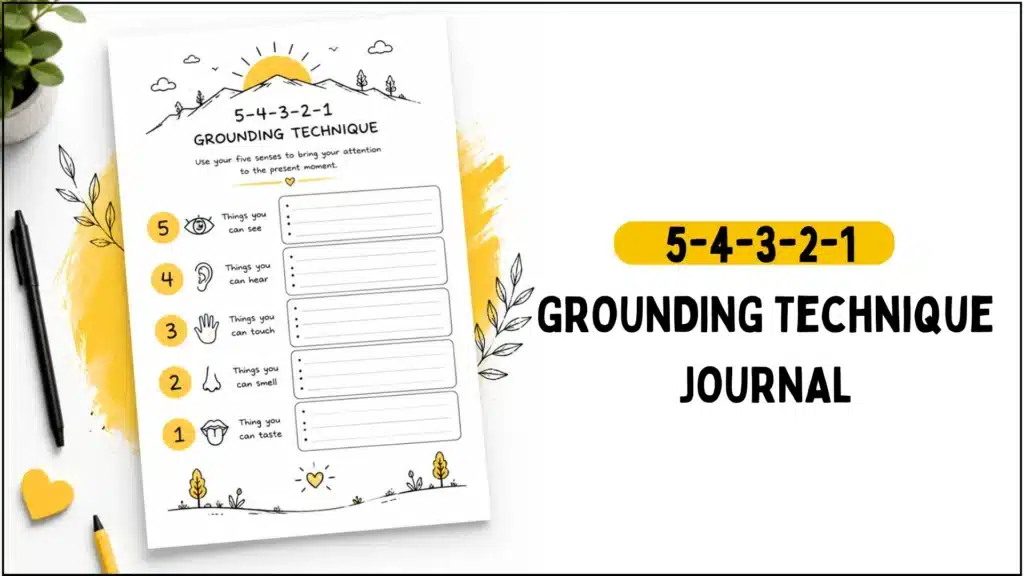
| Printable worksheet | PDF/paper | Classrooms, therapy offices, kids | Free |
For example, apps like MindShift CBT are built specifically around cognitive behavioral therapy principles and include structured grounding exercises. If you’d rather avoid apps altogether, a simple printable worksheet or even a sticky note with the five steps written out works just as well.
This blends nicely with our best mental health apps roundup for anyone comparing more options.
For more structured anxiety management, you might also explore mindfulness exercises for beginners to build a broader daily practice, not just a crisis response.
What’s Next: Building a Broader Grounding and Coping Toolkit
By practicing the 5-4-3-2-1 technique regularly, not just during moments of panic, you can build the kind of muscle memory that makes it faster and more effective when you truly need it. Think of it the way you’d think of a fire drill: you don’t want to be learning the steps for the first time during an actual emergency.
First, consider pairing this technique with deep breathing exercises for anxiety for a more complete calming routine. Second, explore progressive muscle relaxation as a complementary body-based grounding method. Third, build a personal coping skills for anxiety toolkit that includes multiple techniques, so you’re never relying on just one tool.
Plus, practicing daily, even for 60 seconds during a calm moment, helps rewire your brain’s automatic stress response over time. This is often called “resourcing,” and it’s a foundational concept in trauma-informed therapy.
Conclusion
The 5-4-3-2-1 Grounding Technique is a simple, science-informed tool that uses your five senses to pull you out of anxious thought spirals and back into the present moment.
It costs nothing, requires no equipment, and can be used almost anywhere in a meeting, on a train, or lying awake at 2 a.m. Like any skill, it gets easier and more effective the more you practice it, even outside moments of crisis.
If anxiety, panic, or trauma symptoms are showing up often in your life, consider using this technique alongside support from a licensed therapist or counselor who can help you build a plan suited to your needs. You deserve tools that actually work, and now you have one more in your pocket.
FAQ’s About 5-4-3-2-1 Technique
1. How does the 5-4-3-2-1 grounding technique work?
A. It works by redirecting your attention from anxious thoughts to physical sensory input, engaging sight, touch, hearing, smell, and taste in sequence to calm the nervous system.
2. What’s the difference between grounding and deep breathing exercises?
A. Grounding techniques use sensory awareness to anchor you in the present moment, while deep breathing exercises focus on regulating your breath and heart rate directly; many people use both together.
3. How often should you practice grounding techniques?
A. Practicing once or twice daily, even when you’re not anxious, helps build familiarity so the technique works faster when you actually need it during a stressful moment.
4. Is the 5-4-3-2-1 technique backed by therapists?
A. Yes, it’s widely taught by therapists and counselors as part of CBT and trauma-informed care, particularly for anxiety, panic attacks, and PTSD-related symptoms.
5. Can adults and children both use this technique?
A. Yes, though children often benefit from a simplified or game-like version, especially for younger kids who may struggle with the smell and taste steps.
Disclaimer: The content on this website is for informational and educational purposes only. It is not intended as medical, mental health, legal, financial, or professional advice. Always consult a qualified professional regarding your specific situation. Your use of this information is at your own discretion.

I’m Joe, the voice behind this blog. I write about signs, thoughts, and moments that don’t feel random. Simple things that somehow seem to carry a deeper meaning. This space is for anyone who feels there’s more to life than what we see on the surface. Through articles on spirituality, self-discovery, manifestation, and personal growth, I aim to help readers explore the messages, patterns, and connections that may be guiding their journey.