
You’ve probably experienced this without even realizing it.
A song suddenly changes your mood. A certain sound makes you feel calm. Another one irritates you instantly. It feels random, but it’s not.
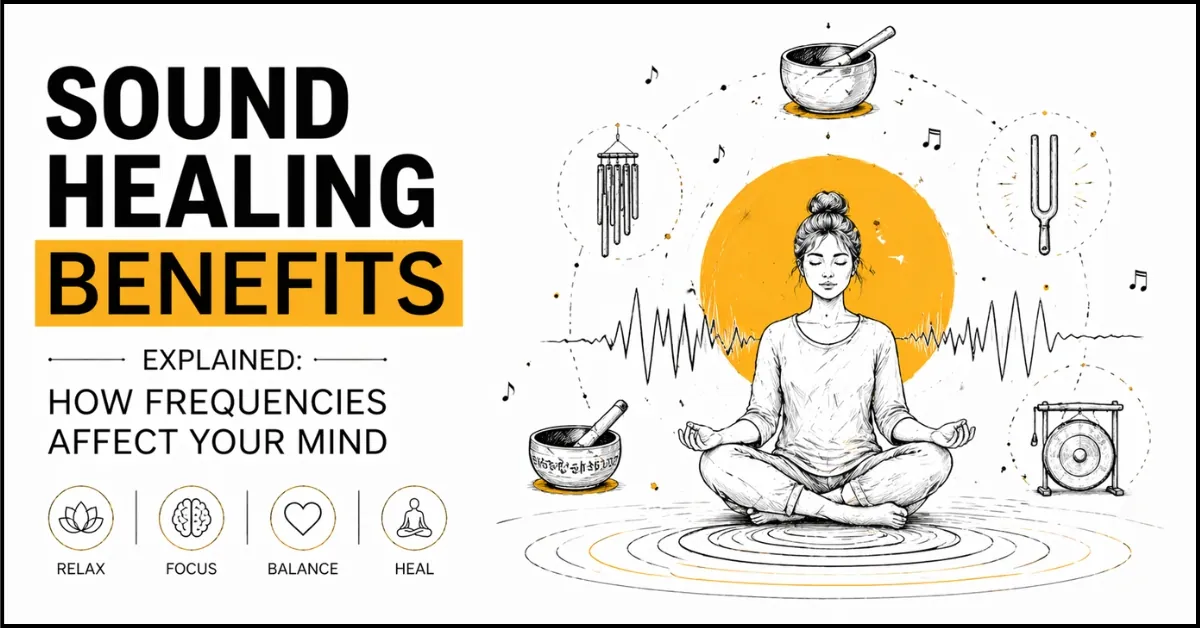
Sound doesn’t just pass through your ears. It interacts with your brain, your nervous system, and even your emotional state. And once you understand how this works, the idea of sound healing benefits starts to feel less mysterious and more real.
Table of Contents
What Is Sound Healing and How Does It Work?
Sound healing uses specific frequencies and vibrations to influence your mental and emotional state.
At its core, it works by interacting with brainwaves and the nervous system. Different frequencies can either stimulate or calm your mind.
From a scientific perspective, studies in neuroscience and music therapy show that sound can alter brainwave activity. According to research referenced by organizations like the National Institutes of Health, certain sound patterns can promote relaxation and reduce stress levels.
👉 In simple terms: your brain responds to sound faster than you think.
👉 Related Article: Why Listening to 432 Hz Frequency Feels So Calming
Why Do Certain Frequencies Affect Your Mind So Deeply?
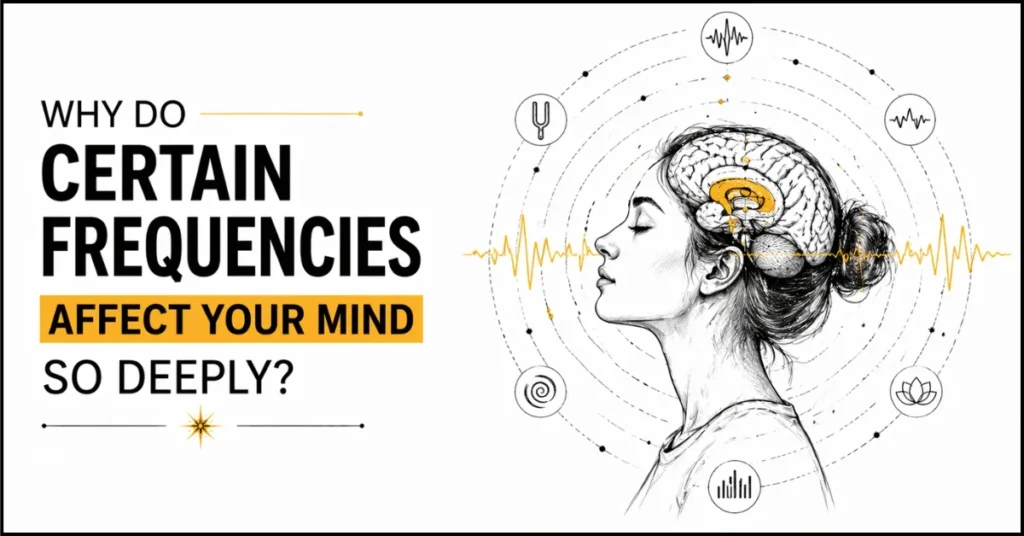
Your brain naturally syncs with external rhythms. This process is called brainwave entrainment.
When you hear repetitive sounds or frequencies, your brain begins to match that rhythm.
For example:
- Slow frequencies → promote calmness and relaxation
- Medium frequencies → support focus and awareness
- High frequencies → increase alertness or tension
Research in auditory neuroscience (like findings shared by the American Psychological Association) shows that sound patterns can directly influence emotional regulation.
👉 This is why music can instantly change how you feel without effort.
What Are the Real Sound Healing Benefits?
Sound healing benefits are mainly connected to mental clarity, emotional balance, and stress reduction.
Here’s what people commonly experience:
- Reduced stress and anxiety
- Improved focus and concentration
- Better sleep quality
- Emotional release and clarity
- Increased sense of calm
From a psychological perspective, calming sounds activate the parasympathetic nervous system, which helps your body relax.
According to insights published by Harvard Medical School, relaxing auditory stimuli can lower heart rate and reduce cortisol (a stress hormone).
👉 This explains why sound therapy is often used in meditation and therapy sessions.
👉 Related Article: Listening to the Same Sound Daily Can Change You – Here’s How
Can Sound Really Change Your Brain?
Yes, but not in a magical way.
Sound influences your brain through neural pathways and emotional processing. It doesn’t “transform” your brain instantly, but it can gradually shift how your mind reacts to stress and stimuli.
Here are some key facts:
- Music therapy is used in clinical settings for anxiety and depression
- Rhythmic sounds can improve cognitive focus
- Certain tones help regulate breathing patterns
- Sound exposure can influence mood within minutes
👉 This isn’t belief-based: it’s backed by behavioral and neurological research.
Why Do You Feel Calm With Certain Sounds?
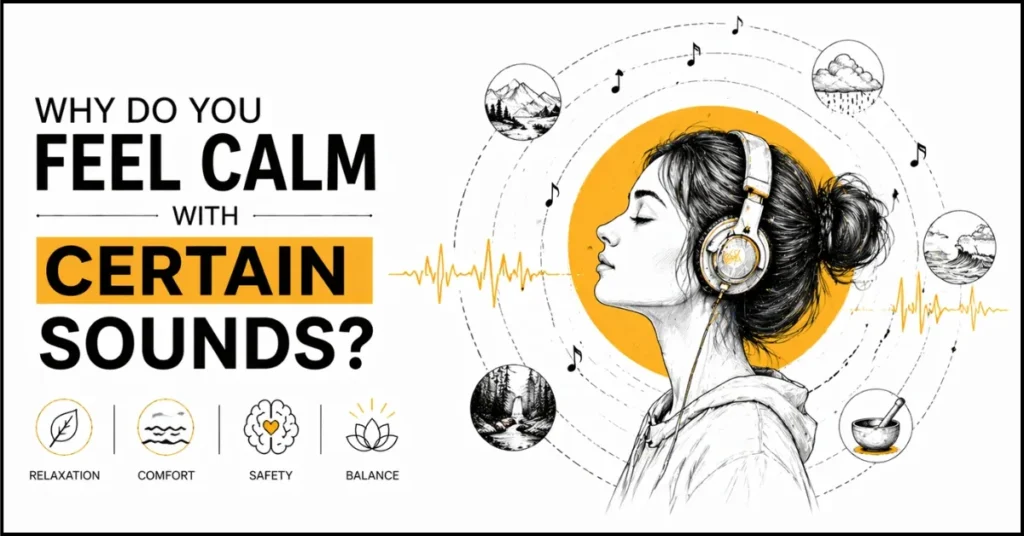
Because your nervous system recognizes safety through patterns.
Slow, repetitive sounds signal your brain that there is no immediate threat. This allows your body to relax.
Examples include:
- Rain sounds
- Ocean waves
- Soft instrumental music
- Singing bowls or frequency tones
From a behavioral standpoint, your brain associates these sounds with stability and predictability.
👉 And predictability creates calm.
Are Binaural Beats and Frequency Sounds Effective?
Yes, but with realistic expectations.
Binaural beats work by playing slightly different frequencies in each ear, which your brain processes as a single tone.
This can influence brainwave activity, especially for:
- Relaxation
- Focus
- Sleep
However, results vary from person to person.
Studies referenced in journals linked to the National Center for Biotechnology Information suggest that binaural beats may improve relaxation, but they are not a cure or guaranteed solution.
👉 Think of them as a support tool, not a miracle fix.
This Is What Most People Misunderstand
Sound healing is not about instant transformation.
It’s about gradual influence.
Many people expect dramatic results quickly, but the real benefit comes from consistent exposure and awareness.
From experience and observation, people who use sound intentionally (during meditation, focus, or relaxation) report better results than those who expect immediate change.
👉 The shift is subtle but powerful over time.
How Can You Use Sound Healing in Daily Life?
You don’t need special tools to experience sound healing benefits.
Start simple:
- Listen to calming music while working
- Use white noise or nature sounds for sleep
- Try guided sound meditations
- Use binaural beats for focus sessions
- Reduce exposure to harsh, loud noise
👉 The key is consistency, not complexity.
Is Sound Healing Scientific or Just a Trend?
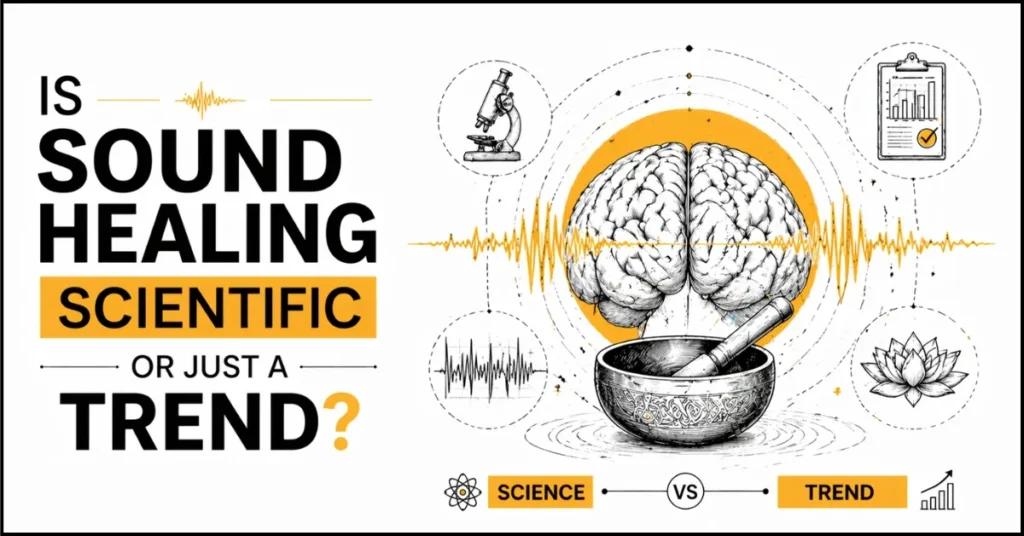
It’s a mix of both.
The concept of using sound for healing has existed for centuries. But modern science explains how and why it works.
Important facts:
- Music therapy is clinically recognized
- Sound affects brainwave activity
- Auditory stimuli influence emotional processing
- Stress reduction through sound is measurable
👉 So while some claims are exaggerated online, the core idea is scientifically grounded.
Important Disclaimer
Sound healing is not a medical treatment or replacement for professional care. While many people experience benefits, results vary depending on individual conditions and usage.
If you are dealing with serious mental or physical health issues, consult a licensed professional.
Final Thoughts
Sound is not just something you hear; it’s something your brain responds to instantly.
The real power of sound healing benefits lies in subtle, consistent influence. It’s not about dramatic change overnight, but about gradually shifting how your mind feels, reacts, and processes the world around you.
And once you start noticing how sound affects you, you’ll realize something simple but powerful:
You’ve been experiencing this all along.
FAQ’s About Sound Healing
1. What are the sound healing benefits?
A. They include stress reduction, improved focus, emotional balance, and better sleep quality.
2. Does sound healing really work?
A. Yes, to an extent. Scientific research shows sound can influence brainwaves and emotional states.
3. How long does sound healing take to work?
A. Some effects are immediate (like relaxation), while deeper benefits require consistent use.
4. Are binaural beats safe?
A. Yes, they are generally safe for most people when used at normal listening levels.
5. Can sound healing help with anxiety?
A. It can support relaxation and stress reduction, but it is not a replacement for medical treatment.

I’m Joe, the voice behind this blog. I write about signs, thoughts, and moments that don’t feel random. Simple things that somehow seem to carry a deeper meaning. This space is for anyone who feels there’s more to life than what we see on the surface. Through articles on spirituality, self-discovery, manifestation, and personal growth, I aim to help readers explore the messages, patterns, and connections that may be guiding their journey.