
You’ve probably tried deep breathing. Maybe journaling. Possibly even medication. But have you ever considered that the right sound played at the right frequency could quiet your anxious mind faster than almost anything else you’ve tried?
This isn’t a wellness trend invented on TikTok. Sound healing for anxiety has roots that stretch back thousands of years, and today, a growing body of peer-reviewed research is starting to catch up with what ancient cultures already knew. From Tibetan singing bowls to binaural beats, specific sounds and vibrations are showing measurable results in reducing anxiety, lowering cortisol, and shifting the brain into calmer states.
This article breaks down exactly what works, what the science actually says, and how you can start using sound healing today, no expensive sessions required.
Table of Contents
What Is Sound Healing for Anxiety?
Sound healing is a therapeutic practice that uses specific frequencies, tones, and vibrations to influence the nervous system and promote emotional and physical well-being. For anxiety specifically, the goal is to shift the body out of a stress response and into a calmer, more regulated state.
It’s not just about listening to relaxing music. Sound healing involves intentional frequencies instruments like Tibetan singing bowls, tuning forks, gongs, and audio tools like binaural beats each of which interacts with the brain and body in distinct, measurable ways.
Historically, sound has been used for healing across cultures worldwide, from Vedic mantras in ancient India and Aboriginal didgeridoos in Australia to Gregorian chants in medieval Europe. The modern resurgence is simply science catching up with tradition.
👉 Related Article: Why Listening to 432 Hz Frequency Feels So Calming
Does Sound Healing Actually Work for Anxiety? What the Research Says
Yes, and the evidence is stronger than most people realize.
A 2025 systematic review published in JMIR Mental Health examined 34 studies focused on sound interventions and stress response in adults. Researchers analyzed data from PubMed, Web of Science, Scopus, and PsycINFO, covering studies from 1990 to 2024.
Here is what the research currently supports:
Tibetan Singing Bowls
A widely cited observational study published in the Journal of Evidence-Based Integrative Medicine studied 62 adults who participated in Tibetan singing bowl meditation. Participants reported significantly less tension, anger, fatigue, and depressed mood following the sound meditation, with all results at p less than .001. Participants new to this type of meditation experienced an especially notable reduction in tension compared to those already experienced with it.
A 2025 systematic review published in Healthcare analyzed 14 quantitative studies over 16 years. Most studies reported significant reductions in anxiety and depressive symptoms, improvements in well-being and quality of life, increases in Heart Rate Variability, and decreases in heart rate. Some studies also found increased Delta and Theta brainwave activity.
Cortisol and the Stress Hormone Connection
One of the clearest physiological markers of anxiety is elevated cortisol, the body’s primary stress hormone. Research on vibroacoustic therapy using Himalayan singing bowls found that 25 to 30-minute vibration sessions in the frequency range of 50 to 250 Hz led to a decrease in intracellular cortisol levels and stress index, as well as an increase in heart rate variability.
Music therapy has been shown to reduce cortisol levels, thereby alleviating stress. One proposed mechanism involves modulation of the cortico-hypothalamic speech circuit, with music exerting a regulatory effect on the amygdala, leading to reduced emotional reactivity.
Binaural Beats
Certain sound frequencies can guide brainwaves into theta or alpha states, linked with deep relaxation, introspection, and creativity. Low-frequency sound waves may stimulate the vagus nerve, enhancing parasympathetic activity, reducing inflammation, and improving mood.
Nature Sounds
The 2025 scoping review found that music, especially classical and self-selected pieces, effectively reduces physiological stress markers, including cortisol levels, heart rate variability, and blood pressure. Nonmusical sounds such as nature sounds and calming voices also demonstrate potential for stress relief.
👉 Related Article: Sound Healing Benefits Explained: How Frequencies Affect Your Mind
What Types of Sound Healing Work Best for Anxiety?
Not all sound-based approaches are equal. Here’s what the current evidence supports most strongly:
Tibetan and Himalayan Singing Bowls
Singing bowls produce rich, layered tones when struck or rimmed. These tones may create binaural-beat-like effects in the brain, promoting relaxation. A 2019 study found that Himalayan singing bowls can help induce a deep state of relaxation in a short period of time, often under 20 minutes.
They are widely considered one of the most accessible and well-researched tools in sound healing. Sessions can be attended in person or experienced through high-quality recordings.
Binaural Beats
Binaural beats work by playing two slightly different frequencies, one in each ear, causing the brain to perceive a third “phantom” frequency. This perceived tone can guide the brain toward calmer states.
A 2020 meta-analysis published in Frontiers in Psychology found significant reductions in anxiety across multiple studies using binaural beats. Another study published in the Journal of Alternative and Complementary Medicine showed that patients exposed to 6 Hz theta binaural beats experienced lowered anxiety during dental procedures.
To use binaural beats effectively, you need stereo headphones. The effect does not work through speakers.
Sound Baths
A sound bath is an immersive group experience where participants lie down while practitioners play instruments, typically gongs, singing bowls, and chimes, around them. Participants regularly report less stress, better sleep, and clearer minds, and physiological studies back up many of those changes.
Sound baths are available at yoga studios, wellness centers, and even online through platforms like YouTube and Insight Timer.
Music Therapy
Guided or passive music therapy, especially classical music and personally meaningful selections, consistently shows up in research as effective. Music, especially classical and self-selected pieces, effectively reduces physiological stress markers, including cortisol levels, heart rate variability, and blood pressure.
The key finding here is that self-selected music you personally find calming tends to outperform standardized playlists because it carries emotional resonance for the listener.
Nature Sounds
Recordings of rain, rivers, forest ambience, and ocean waves have demonstrated measurable stress-reducing effects. Nonmusical sounds such as nature sounds and calming voices also demonstrate potential for stress relief, although research in this area remains more limited.
They are especially useful as sleep aids and background ambience during work or rest.
👉 Related Article: Listening to the Same Sound Daily Can Change You
How Does Sound Healing Actually Affect the Brain and Body?
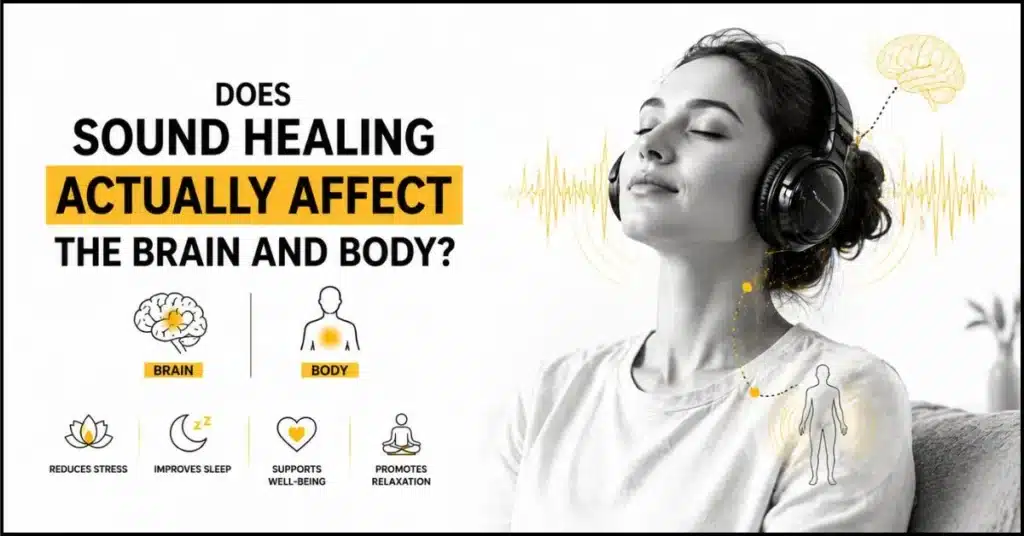
Understanding the mechanism makes the practice feel less like magic and more like medicine. Here’s what happens neurologically and physiologically:
Brainwave Entrainment
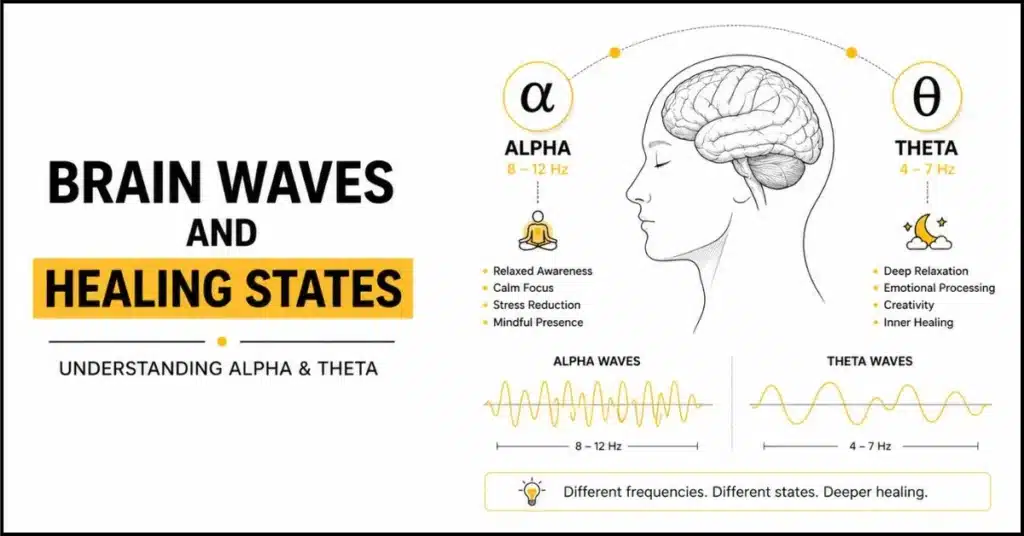
The brain has a natural tendency to synchronize its electrical activity with external rhythmic stimuli. This is called entrainment. When you expose the brain to specific sound frequencies, it begins to shift its dominant brainwave pattern. Exposure to binaural beats can influence EEG brainwave activity, promoting alpha and theta states commonly associated with deep relaxation and meditation.
The Amygdala Response
The amygdala is the brain’s fear and threat-detection center. Anxiety disorders are often linked to an overactive amygdala. Music may exert a regulatory effect on the amygdala, leading to reduced emotional reactivity. This is why certain sounds and music can make anxious thoughts feel less urgent or overwhelming.
The Vagus Nerve
The vagus nerve is the primary highway of the parasympathetic nervous system, the system responsible for rest and digestion, as opposed to the fight-or-flight response. Sound, especially low-frequency vibration, appears to stimulate vagal activity, which naturally dampens anxiety.
Dopamine Release
The neurotransmitter dopamine, associated with music-induced pleasure, plays a key role in neuroplasticity and behavioral learning. Sound healing that feels genuinely pleasurable may also support longer-term emotional resilience through this dopamine-neuroplasticity connection.
How to Start Sound Healing for Anxiety at Home
You do not need to spend money on expensive sessions to experience real benefits. Here’s how to begin:
Start with a 20-Minute Singing Bowl Recording
Search YouTube or Spotify for “Tibetan singing bowl meditation” and choose a session of 20 minutes or longer. Lie down, close your eyes, and focus on the sound. Do not try to control your thoughts. Simply let the sound move through you.
Try Theta Binaural Beats Before Sleep
Theta binaural beats at around 6 Hz have been shown to reduce anxiety in clinical settings. Wear stereo headphones, find a theta binaural beats track on YouTube or a dedicated app, and listen for 20 to 30 minutes as you wind down for the night.
Attend a Local Sound Bath
Many yoga studios offer sound bath events, often on weekend evenings. These are typically affordable, around $15 to $30 for a session, and require nothing more than comfortable clothing and a willingness to lie still.
Build a Daily Sound Ritual
Even 10 minutes a day of intentional listening to nature sounds, a calming playlist, or binaural beats can create cumulative benefits over time. Consistency matters more than session length.
👉 Related Article: Forget Sleep Playlists – This Is What Actually Quiets Your Mind at Night
What Sound Healing Cannot Do
Being clear about limitations is important. Sound healing is a complementary practice, not a replacement for professional mental health care.
If you are managing clinical anxiety, PTSD, panic disorder, or another diagnosed condition, sound healing works best alongside, not instead of, evidence-based treatments like cognitive behavioral therapy (CBT), medication, or professional counseling.
If you are diagnosed with a mental disorder like PTSD, anxiety, or depression, be sure to work with your doctor or therapist to make sure you can manage the thoughts and feelings that might arise during singing bowl sessions.
People with epilepsy should exercise caution, as the vibrations from singing bowls may, in rare cases, trigger seizures. Those with metal implants or pacemakers should also consult a physician before using direct-contact singing bowl therapy.
Key Facts: Sound Healing for Anxiety at a Glance
- A 2025 systematic review of 14 studies found significant reductions in anxiety scores from Tibetan singing bowl interventions, with Cohen’s d values of 1.51 and 2.18 in controlled trials, indicating large effect sizes
- The 2025 JMIR scoping review analyzed 34 studies across 34 years and found consistent evidence that music and sound reduce physiological stress markers
- A 2019 study confirmed that singing bowl sessions can induce deep relaxation in under 20 minutes
- Binaural beats studies have shown anxiety reduction during medical procedures, with theta-frequency (6 Hz) beats among the most studied
- Sound healing practices trace back thousands of years across Tibetan, Vedic, Aboriginal, and Ancient Greek cultures
- Research consistently shows increases in heart rate variability (a key marker of parasympathetic nervous system activity) following sound-based interventions
- Sound healing is low-cost, non-invasive, and accessible via free platforms like YouTube
FAQ’s About Sound Healing for Anxiety
1. What frequency is best for anxiety relief?
A. Theta frequencies, typically between 4 and 8 Hz, are most commonly associated with deep relaxation and reduced anxiety. Alpha waves (8 to 13 Hz) are also linked to calm, alert states. Binaural beats tracks targeting these ranges are widely available.
2. How long does it take for sound healing to work for anxiety?
A. Many people notice a reduction in tension and mental agitation after a single session. Research suggests 20-minute sessions are enough to produce measurable physiological changes. Consistent practice over several weeks tends to produce cumulative benefits.
3. Can I do sound healing at home without special equipment?
A. Yes. High-quality recordings of singing bowls, binaural beats, and nature sounds are freely available on YouTube, Spotify, and apps like Insight Timer. Binaural beats require stereo headphones to work as intended.
4. Is sound healing scientifically proven?
A. The evidence is promising but still developing. Multiple peer-reviewed studies support its effectiveness for reducing anxiety, lowering cortisol, and improving mood. However, most researchers call for larger randomized controlled trials to confirm findings more definitively.
5. Is sound healing safe for everyone with anxiety?
A. For most people, yes. It is non-invasive and low-risk. However, people with epilepsy, certain metal implants, or severe PTSD should consult a healthcare provider first. Sound healing should complement, not replace, professional mental health treatment.
6. What is the difference between sound healing and music therapy?
A. Music therapy is a clinical discipline practiced by credentialed therapists and uses music to meet specific therapeutic goals. Sound healing is a broader, often self-directed practice involving various instruments and frequencies. Both can support anxiety relief, but music therapy is more structured and clinically validated.
7. Do sound baths really help anxiety?
A. Research and widespread self-reported experience both suggest yes. A sound bath creates an immersive environment of sustained vibrational tones that activate the parasympathetic nervous system and promote deep relaxation, a state physiologically incompatible with acute anxiety.
Disclaimer: This article is intended for informational purposes only and does not constitute medical advice. Sound healing is a complementary wellness practice and should not replace professional diagnosis or treatment for anxiety disorders or any other medical condition. If you are experiencing significant anxiety, please consult a qualified healthcare provider or licensed mental health professional.
Sources: JMIR Mental Health (2025), Healthcare Systematic Review (2025), Journal of Evidence-Based Integrative Medicine (2017), PubMed/National Institutes of Health, ScienceDirect, Washington University Office of Neuroscience Research, Frontiers in Psychology.

I’m Joe, the voice behind this blog. I write about signs, thoughts, and moments that don’t feel random. Simple things that somehow seem to carry a deeper meaning. This space is for anyone who feels there’s more to life than what we see on the surface. Through articles on spirituality, self-discovery, manifestation, and personal growth, I aim to help readers explore the messages, patterns, and connections that may be guiding their journey.