
You look in the mirror and feel nothing. Or worse, you feel like you’re looking at someone you used to know.
That person who had big dreams, strong opinions, or even just a clear sense of who they were seems far away now. Maybe even gone. And no one around you seems to notice, which somehow makes it lonelier.
This feeling of being disconnected from yourself is real. It has a name. And there are very specific reasons it happens to people, often during some of the most ordinary stretches of life.
You are not broken. But something has shifted. And understanding why is the first step to finding your way back.
Table of Contents
What Does It Mean to Feel Disconnected From Yourself?
Feeling disconnected from yourself means losing a clear, consistent sense of who you are. It shows up as emotional numbness, going through the motions, or feeling like a passive observer of your own life.
Psychologists sometimes call this depersonalization or a loss of self-continuity. According to the American Psychological Association, depersonalization involves a sense of being detached from your mental processes or body, as though you are an outside observer of your own thoughts, feelings, and sensations.
It is more common than most people realize. Research published in the journal Psychiatric Clinics of North America estimates that transient depersonalization affects up to 74% of individuals at some point in their lives.
You might notice it as:
- Feeling emotionally flat even when something good happens
- Not recognizing your own voice, opinions, or choices
- Struggling to remember what you used to enjoy
- Feeling like your life belongs to someone else
- Going days without feeling fully present
This is not a personality flaw. It is a response that your mind and body produce for specific, understandable reasons.
👉 Related Article: Why Do I Feel Disconnected From Everyone?
Why Do People Feel Disconnected From Themselves?
Is Chronic Stress Literally Changing Who You Are?
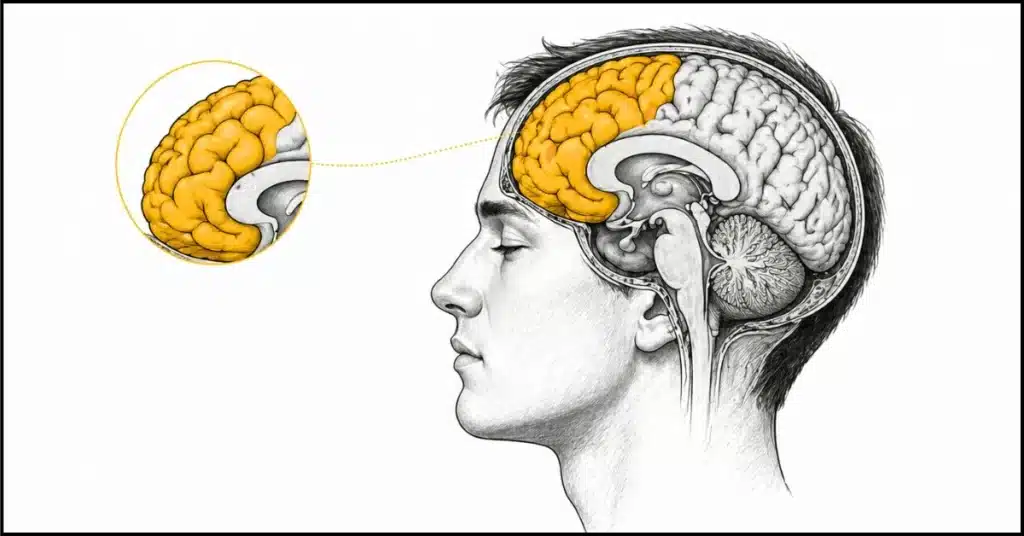
Yes, and the research backs this up. Chronic stress rewires the brain over time, particularly the prefrontal cortex, the region responsible for self-awareness, decision-making, and emotional regulation.
A landmark study from Yale University found that prolonged stress reduces gray matter in the prefrontal cortex. When this area is compromised, you lose touch with your values, your sense of purpose, and ultimately your sense of self.
In other words, stress does not just make you tired. It slowly erodes the very part of your brain that holds your identity together.
If you have been under sustained pressure from work, relationships, finances, or caregiving, disconnection from yourself is not a mystery. It is a neurological consequence.
How Does Trauma Disconnect You From Yourself?
Trauma is one of the most well-documented causes of self-disconnection. When the brain experiences something overwhelming, it sometimes “checks out” as a protective response.
Dr. Bessel van der Kolk, a leading trauma researcher and author of The Body Keeps the Score, explains that trauma survivors often describe feeling numb, hollow, or like they are watching their life from the outside. This dissociation is the brain’s way of surviving an experience it cannot fully process.
Even smaller, accumulated traumas, sometimes called “little t” traumas, can create this effect. A difficult childhood, a painful breakup, years of feeling unseen or unheard: these experiences stack up and pull you away from yourself quietly, over time.
Can Major Life Transitions Cause a Loss of Identity?
Absolutely. Transitions are one of the most underrated triggers of self-disconnection.
Graduating, moving cities, getting married, having children, losing a job, entering your 30s or 40s these events shake the stories you have been telling yourself about who you are. When the context of your life changes dramatically, the old identity no longer fits. And the new one has not fully formed yet.
Psychologist Erik Erikson, whose theory of psychosocial development remains one of the most cited frameworks in developmental psychology, identified identity confusion as a core human struggle not just in adolescence, but throughout adult life.
That in-between space? That is where disconnection lives.
Does Spending Too Much Time Online Affect Your Sense of Self?
Research increasingly says yes. Excessive social media use has been linked to weakened self-concept and identity confusion.
A 2023 review in Computers in Human Behavior found that passive social media consumption, scrolling without engaging, was associated with higher rates of self-estrangement and lower self-clarity. You spend so much time seeing who everyone else is that you lose the thread of who you are.
Additionally, constantly curating a digital version of yourself creates a split: the real you versus the performed you. Over time, that gap starts to feel enormous.
Is People-Pleasing Making You a Stranger to Yourself?

One of the quietest causes of self-disconnection is chronic people-pleasing. When you consistently suppress your needs, opinions, and feelings to keep others comfortable, you gradually lose track of what you actually think and feel.
Psychologists call this “self-abandonment.” You trade authenticity for approval and after years of doing it, you genuinely do not know who you are outside of what others need from you.
If you feel disconnected from yourself but cannot point to a single dramatic cause, look here first.
👉 Related Article: Why You Suddenly Prefer Being Alone – Here’s What’s Really Going On
What Are the Signs You Are Disconnected From Your True Self?
Recognizing the signs is important because this feeling often sneaks up slowly. Watch for:
- Emotional numbness: Joyful events feel flat. Sadness feels distant. You feel “muted.”
- Autopilot living: You get through days but cannot remember much of what happened.
- Loss of preferences: You genuinely do not know what you want, enjoy, or believe anymore.
- Mirror disconnect: Looking at yourself feels strange, like you are meeting someone unfamiliar.
- Hollow relationships: You are physically present with people, but emotionally nowhere.
- No sense of future: Planning ahead feels pointless or abstract.
Experiencing a few of these regularly is a strong signal that your connection to yourself needs attention.
Can Depression and Anxiety Cause Feelings of Disconnection?
Yes, and this connection is well-established in clinical literature.
Both depression and anxiety alter how you experience yourself. Depression is characterized by anhedonia, an inability to feel pleasure, which naturally creates distance from your former, more engaged self. Anxiety, on the other hand, keeps you so locked in perceived threats that there is no space left to simply be yourself.
The National Institute of Mental Health notes that identity disturbance, feeling unsure of who you are or having a shifting self-image, is a recognized symptom across several mental health conditions, including borderline personality disorder, dissociative disorders, and major depressive disorder.
If your disconnection is severe, persistent, or accompanied by depression, anxiety, or intrusive thoughts, speaking with a licensed mental health professional is strongly recommended.
How to Reconnect With Yourself: What Actually Works
Start With Stillness, Not Solutions
Most people respond to disconnection by consuming more content, seeking more opinions, and moving faster. But reconnection almost always begins with slowing down.
Even 10 minutes of daily stillness, no phone, no background noise, gives your nervous system a chance to settle and your inner voice a chance to surface.
Return to What You Loved Before the World Had Opinions
Think back to who you were before external pressures shaped your choices. What did you love doing at 10 years old? What made you lose track of time before you were supposed to be productive?
These clues are not nostalgic distractions. They are signposts back to your core self.

Journaling Builds a Bridge Back to You
Writing about your thoughts, feelings, and experiences without editing for an audience is one of the most research-supported methods for rebuilding self-awareness.
A study published in Advances in Psychiatric Treatment found that expressive writing significantly improved self-concept clarity and reduced feelings of disconnection in participants over time.
You do not need to write beautifully. You just need to write honestly.
Set One Small Boundary This Week
Every time you honor your own needs over the desire to please, you send a message to yourself: your thoughts and feelings matter. Boundaries are not walls. They are acts of self-recognition.
Seek Professional Support When Needed
Therapies, especially approaches such as Internal Family Systems (IFS), somatic therapy, and Acceptance and Commitment Therapy (ACT), are designed to help people reconnect with their authentic selves. These are not last resorts. They are tools.
👉 Related Article: Spiritual Awakening Signs: What You’re Really Experiencing
Factual Insights Worth Knowing
- The brain’s default mode network (DMN), active during self-reflection, can be disrupted by chronic stress, leading to reduced self-awareness. (Source: Nature Neuroscience)
- Depersonalization disorder affects an estimated 1-2% of the general population in its clinical form, though milder episodes are far more widespread. (Source: DSM-5, APA)
- The concept of “identity continuity” – the sense that you are the same person across time is a recognized construct in personality psychology, first formalized by philosopher John Locke.
- Sleep deprivation significantly impairs prefrontal cortex functioning, worsening the sense of being disconnected from one’s values and self.
- Mindfulness-based practices have been shown in multiple peer-reviewed trials to strengthen the connection between a person’s experienced self and their core values.
- Social isolation, even short-term,
- has been found to reduce self-concept clarity, according to research from the University of Chicago’s Social Neuroscience Lab.
- The World Health Organization recognizes dissociative experiences as a global mental health concern, noting they are frequently underdiagnosed.
FAQ’s
1. Why do I feel disconnected from myself for no reason?
A: Disconnection often builds gradually due to chronic stress, overextension, people-pleasing, or accumulated small losses. There may not be one dramatic cause, and that is completely normal.
2. Is feeling disconnected from yourself a mental illness?
A: Not necessarily. Transient feelings of disconnection are common and normal. However, if the feeling is persistent, distressing, or interfering with daily life, it may be related to a condition like depersonalization disorder, depression, or anxiety, and professional evaluation is worthwhile.
3. How long does feeling disconnected from yourself last?
A: It varies widely. Brief episodes can resolve in hours or days. Deeper disconnection tied to trauma, burnout, or identity transitions can last months or longer especially without intentional support.
4. Can therapy help with feeling disconnected from yourself?
A: Yes. Multiple therapy modalities, including IFS, somatic therapy, psychodynamic therapy, and ACT, are specifically effective for rebuilding self-connection and identity clarity.
5. What is the difference between depersonalization and just feeling disconnected?
A: Depersonalization is a clinical term describing a specific sense of being detached from your own mental processes or body. General disconnection from yourself is broader and can include identity confusion, emotional numbness, and loss of personal values without necessarily meeting clinical criteria for depersonalization.
6. Does anxiety cause you to feel disconnected from yourself?
A: Yes. Anxiety keeps the brain in a hypervigilant state, which narrows attention away from self-reflection and authentic feeling. Over time, this can create a significant sense of being a stranger to yourself.
Disclaimer: This article is intended for informational and educational purposes only. It does not constitute medical or psychological advice and should not replace professional consultation. If you are experiencing persistent feelings of disconnection, dissociation, depression, or other mental health symptoms, please consult a licensed mental health professional.

I’m Joe, the voice behind this blog. I write about signs, thoughts, and moments that don’t feel random. Simple things that somehow seem to carry a deeper meaning. This space is for anyone who feels there’s more to life than what we see on the surface. Through articles on spirituality, self-discovery, manifestation, and personal growth, I aim to help readers explore the messages, patterns, and connections that may be guiding their journey.