
What If Healing Could Start With Just Listening?
Imagine lying down, eyes closed, and feeling every layer of tension in your body melt away, not through medicine, not through movement, but through sound. That’s what a sound bath promises. And for millions of people around the world, it’s delivering.
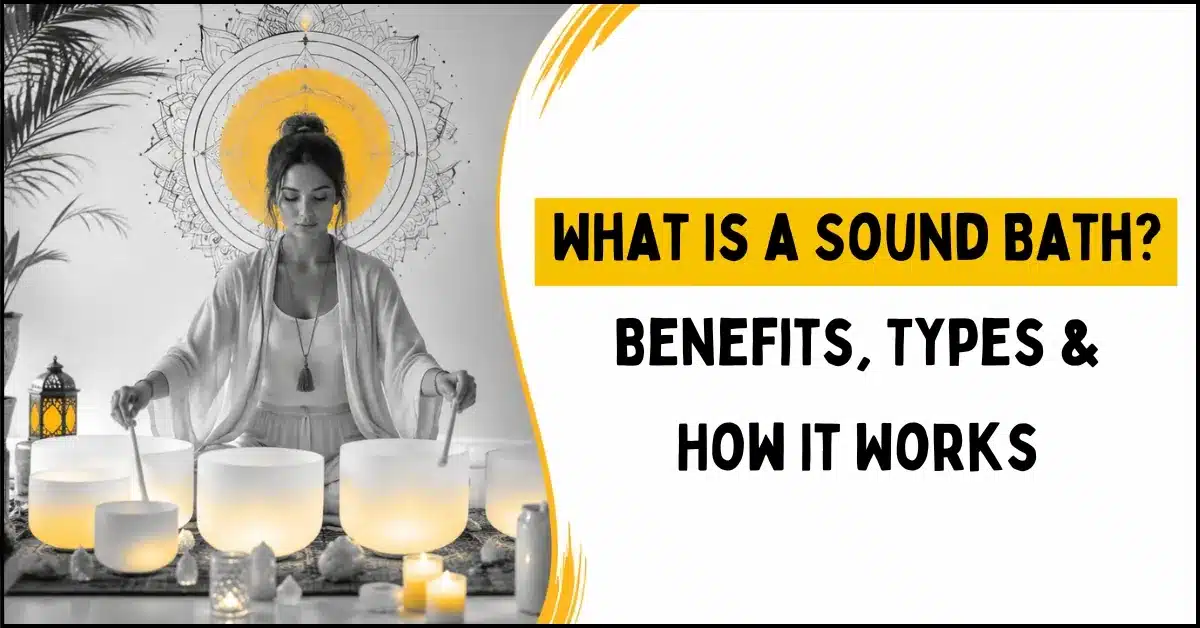
A sound bath is an immersive, meditative experience where you are “bathed” in sound waves produced by instruments like crystal singing bowls, Tibetan bowls, gongs, chimes, and tuning forks. You don’t sing. You don’t move. You simply receive the vibrations.
Rooted in ancient spiritual traditions and now supported by modern wellness science, sound baths sit at the intersection of energy healing, meditation, and vibrational medicine. If you’ve been curious but unsure where to start, this guide covers everything you need to know.
Table of Contents
What Is a Sound Bath, Exactly?
A sound bath is not about water. The word “bath” refers to being immersed in sound. Just like warm water surrounds your body, sound waves surround and penetrate your entire being, your mind, your nervous system, and your energetic field.
During a session, a practitioner plays instruments continuously, creating layers of overlapping tones and frequencies. These vibrations travel through the air and directly through your body, since the human body is approximately 60% water and water is an excellent conductor of sound.
Sound baths typically last between 45 minutes and 90 minutes. You lie on a yoga mat or sit comfortably while the sounds wash over you. No experience is required. No special belief system is needed. You just show up and listen.
According to research published in the Journal of Evidence-Based Integrative Medicine (2016), participants in sound meditation using Tibetan singing bowls reported significantly reduced tension, anger, fatigue, and depressed mood after a single session.
👉 Related Article: Healing Sounds Before Sleep: Do They Really Work?
What Is Sound Bath Meditation?
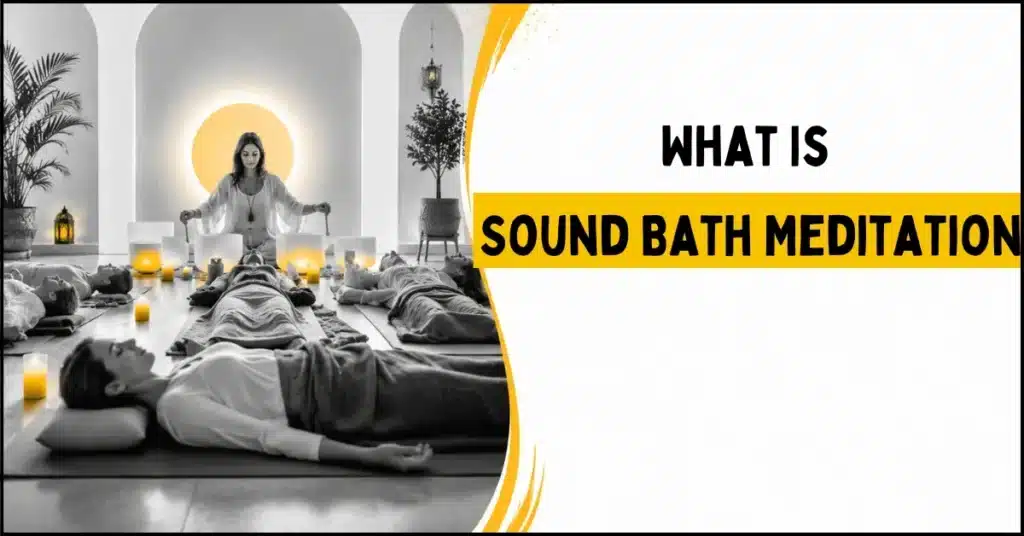
Sound bath meditation is the practice of using sound as the primary anchor for your meditative state.
In traditional meditation, you might focus on your breath or a mantra. In sound bath meditation, the sound itself guides you inward. The shifting tones, harmonics, and vibrations naturally quiet the “thinking mind” and shift your brain into slower wave states, alpha and theta associated with deep relaxation, creativity, and healing.
The universe, in many spiritual traditions, is understood as vibration. Ancient texts from Hinduism describe creation itself beginning with sound, the sacred syllable “Om.” Indigenous cultures across the Americas, Africa, and Asia have used rhythmic drumming and chanting for healing and spiritual connection for thousands of years.
Sound bath meditation is a modern, accessible doorway into that ancient wisdom.
How Does a Sound Bath Work? The Science and the Spiritual
A sound bath works on two levels: the physical and the energetic.
On the physical level, sound waves create vibrations that interact with your body’s cells, tissues, and fluids. This is called vibroacoustic therapy in clinical research. Sound can physically shift the state of your nervous system. According to the American Institute of Stress, activating the parasympathetic nervous system (the “rest and digest” state) is one of the most effective ways to lower cortisol and promote healing.
On the spiritual and energetic level, many traditions teach that the human body holds energy in specific centers called chakras. Stress, trauma, and negative thought patterns can block the flow of this energy. Different sound frequencies are believed to correspond with different chakras, and sound bath practitioners often intentionally work with specific frequencies to clear and rebalance this energy.
From the perspective of the law of attraction, everything in the universe vibrates at a frequency. When you raise your own vibrational frequency through healing modalities like a sound bath, you become more aligned with positive manifestations, health, abundance, love, and clarity of purpose. A sound bath is not just relaxation. It is an energetic reset.
👉 Related Article: Chakra Healing: How to Balance Your Energy Centers and Transform Your Life
Sound Bath Benefits: What Can It Actually Do for You?
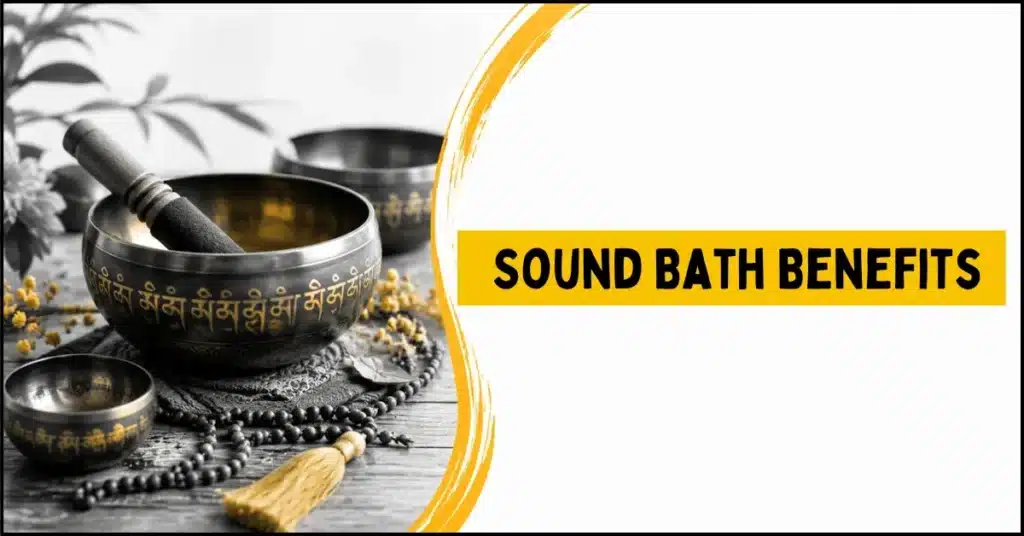
Sound bath benefits are reported across physical, mental, emotional, and spiritual dimensions. Here is what research and consistent practitioner observations support:
Physical Benefits:
- Lowers heart rate and blood pressure through activation of the parasympathetic nervous system
- Reduces cortisol (the stress hormone) levels in the body
- May support pain management by altering the perception of pain
- Promotes deeper, more restorative sleep
Mental and Emotional Benefits:
- Reduces symptoms of anxiety and depression
- Clears mental fog and improves focus and clarity
- Helps release suppressed emotions in a safe, non-verbal way
- Creates a profound sense of inner peace and stillness
Spiritual and Energetic Benefits:
- Raises your vibrational frequency, supporting manifestation work
- Helps clear and balance the seven chakras
- Deepens your connection to your intuition and higher self
- Opens channels for spiritual insight, creativity, and inner guidance
A study by the University of California, San Diego, found that people who regularly engaged in sound meditation showed measurable improvements in mood, mindfulness, and sense of spiritual well-being.
👉 Related Article: Scriptures on Healing the Body | Bible Verses for Healing
Types of Sound Baths and the Instruments Used
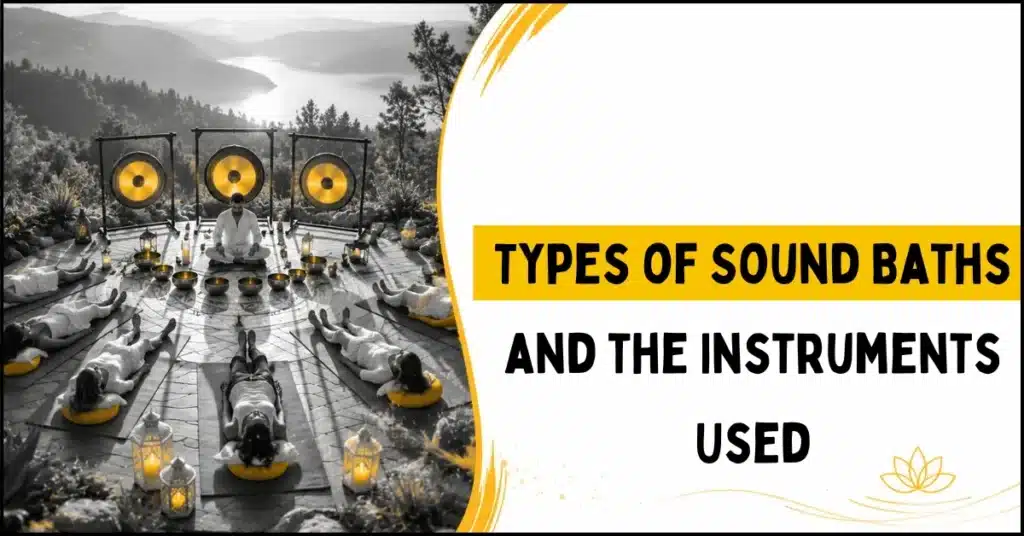
Not all sound baths are the same. Different instruments carry different frequencies and energetic qualities.
- Crystal Singing Bowls: Made from pure quartz crystal, these produce pure, high-frequency tones. They are commonly associated with chakra healing and are often used in modern wellness studios.
- Tibetan Singing Bowls: Ancient metal bowls that produce rich, layered harmonic tones. These have been used in Himalayan Buddhist healing practices for centuries.
- Gongs: Powerful and immersive, gong baths create massive waves of sound that can feel deeply cathartic. They are often used for releasing emotional blockages.
- Tuning Forks: Precisely calibrated instruments that deliver specific frequencies directly to the body’s acupuncture or energy points.
- Drums, Chimes, and Rattles: Often used in shamanic or indigenous-inspired sound healing ceremonies, these instruments connect participants with nature and earth energies.
Each instrument speaks a different language of vibration. Many practitioners blend multiple instruments in a single session to create a layered, full-spectrum healing experience.
What to Expect at Your First Sound Bath
If you have never attended a sound bath, knowing what to expect will help you arrive with confidence.
Before the session, you will typically be asked to silence your phone, remove your shoes, and settle onto a yoga mat with a blanket and pillow. Some studios offer eye masks. The lights are usually dimmed.
The practitioner will briefly introduce the session, guide you into a relaxed position, and begin playing. You do not need to do anything. Your only job is to receive.
During the experience, some people feel tingling sensations. Others see colors or images behind their closed eyes. Some cry without knowing why. Some fall asleep. All of these responses are completely normal and valid. The sound accesses parts of your experience that words and thoughts cannot reach.
After the session, you may feel groggy, floaty, or deeply calm. Drink water. Give yourself time before rushing back into your day. Many people describe the post-sound bath state as the deepest peace they have felt in years.
Myth vs. Reality: What the Spiritual Community Gets Right (and Wrong) About Sound Baths
This is where honesty matters. As a practitioner-informed perspective, it is important to separate genuine wisdom from spiritual misinformation.
| Myth | Reality |
|---|---|
| “A sound bath will instantly fix your trauma or heal your disease.” | A sound bath is a powerful supportive tool, not a cure. It can facilitate emotional release, reduce stress, and shift your energetic state. However, deep trauma often requires professional therapeutic support as well. The universe works through many channels, including trained therapists and medical professionals. A sound bath is one powerful layer of your healing journey, not the whole journey. |
| “You have to believe in it for it to work.” | The physical effects of sound on the nervous system are not belief-dependent. Research shows measurable changes in heart rate, cortisol, and brainwave activity regardless of the participant’s prior beliefs. Your skepticism does not block the vibration. |
| “More expensive bowls or crystals mean a better sound bath.” | The quality of a sound bath is primarily determined by the skill, presence, and intention of the practitioner, not the price of the instruments. A master with modest tools will outperform a novice with thousand-dollar bowls every time. Energy follows intention, not price tags. |
| “Sound baths are a new-age trend with no real roots.” | Vibrational healing through sound is among the oldest healing practices in human history. The use of singing bowls in Tibetan medicine and ritual dates back over 2,000 years. Ancient Greek temples used specific architectural acoustics to support healing. This is ancient technology, not a wellness fad. |
| “If you don’t have a profound experience, it didn’t work.” | Every sound bath works on multiple levels simultaneously, many of which are invisible to the conscious mind. Some sessions feel transcendent. Others feel like simply falling asleep. Both are valid. The nervous system regulation happens whether or not you have a dramatic inner experience. |
Outdated advice to retire: “Just focus on the sound and clear your mind.” This sets beginners up for frustration. Instead, the guidance should be: “Let the sound do the work. You don’t need to focus on anything.”
How to Choose a Qualified Sound Bath Practitioner
Not everyone who owns a singing bowl is a qualified healer. As the field grows, so does the range of quality.
Look for practitioners who have completed formal training in sound healing (programs from institutions like the Sound Healing Research Foundation or similar). Ask about their training, their lineage, and how long they have been practicing. A trustworthy practitioner will be transparent and grounded, never making promises of miraculous cures.
Trust your intuition as well. If a practitioner’s energy feels off, or if their marketing seems more focused on mystical hype than genuine care, listen to that feeling. Your body’s intelligence is one of the most reliable guides you have.
Sound Bath Meditation at Home: A Simple Practice to Start
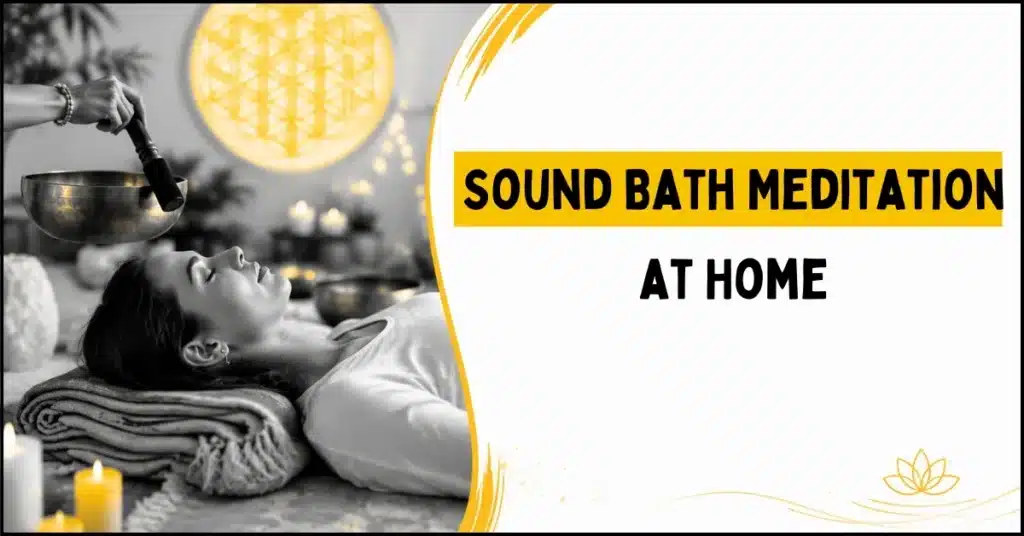
You do not need a studio to begin experiencing the benefits of sound baths. You can start gently at home.
Find a quiet space and time when you will not be interrupted. Lie down comfortably. Play a sound bath recording through good-quality speakers (not earbuds, which do not allow the sound to move through your body effectively). Set an intention before you begin, perhaps something like, “I am open to releasing what no longer serves me.” Then simply rest and listen for 20 to 40 minutes.
Platforms like YouTube, Insight Timer, and Spotify have extensive libraries of high-quality sound bath recordings. Look for recordings that use live instruments rather than synthesized sounds for the most authentic vibrational experience.
Frequently Asked Questions About Sound Baths
1. What is a sound bath good for?
A. A sound bath is beneficial for stress relief, anxiety reduction, improving sleep, emotional release, chakra balancing, and deepening meditation. It is also used as a spiritual tool for raising vibrational frequency and supporting manifestation practices.
2. Is a sound bath safe for everyone?
A. Sound baths are generally safe for most people. However, individuals with epilepsy, certain mental health conditions, pacemakers, or who are in the first trimester of pregnancy should consult a healthcare provider before attending. Some intense gong baths can be very stimulating for sensitive individuals.
3. How often should you do a sound bath?
A. For general wellness, once or twice a month is a good starting point. If you are working through a specific period of stress, grief, or transition, weekly sessions can be deeply supportive. Listen to your body and your energetic needs.
4. What should you wear to a sound bath?
A. Wear loose, comfortable clothing. You will be lying still for an extended period, so layers are helpful since body temperature can drop during deep relaxation.
5. Can a sound bath help with manifestation?
A. From a law of attraction perspective, yes. Manifestation is most powerful when you are in a high-vibrational state, free from fear, resistance, and energetic blocks. A sound bath helps you release those blocks and tune your energy to the frequency of what you desire to attract.
6. Does science support sound bath benefits?
A. Yes, increasingly so. Research published in peer-reviewed journals supports sound meditation’s impact on mood, stress hormones, heart rate variability, and brainwave states. The field of vibroacoustic therapy continues to grow in clinical research settings.
Disclaimer: This article is written for informational and spiritual wellness purposes only. The content reflects a combination of research-supported findings and spiritual traditions. It is not intended to diagnose, treat, cure, or prevent any medical or mental health condition. Always consult a qualified healthcare professional before beginning any new wellness practice, particularly if you have existing health concerns. Spiritual experiences and outcomes from sound bath sessions are subjective and will vary from person to person.

I’m Joe, the voice behind this blog. I write about signs, thoughts, and moments that don’t feel random. Simple things that somehow seem to carry a deeper meaning. This space is for anyone who feels there’s more to life than what we see on the surface. Through articles on spirituality, self-discovery, manifestation, and personal growth, I aim to help readers explore the messages, patterns, and connections that may be guiding their journey.