

You may have met someone who felt impossible to ignore, yet the relationship brought more lessons than peace. What many people don’t realize is that intense attraction isn’t always a sign of a lifelong connection.
In this guide, you’ll learn what a karmic partner is, the signs to watch for, the lessons these relationships teach, and how to move forward with clarity.
Key Takeaways
- A karmic partner is a person who enters your life to teach important emotional, spiritual, or personal growth lessons.
- Karmic relationships are often intense, emotionally charged, and characterized by repeating patterns or unresolved issues.
- Common signs of a karmic partner include strong attraction, frequent conflict, emotional highs and lows, and valuable life lessons.
- Karmic relationships can help individuals develop self-awareness, boundaries, and healthier relationship habits.
- Understanding the difference between karmic partners, soulmates, and twin flames can provide clarity about relationship dynamics.
- Healing after a karmic relationship often involves self-reflection, forgiveness, and breaking unhealthy patterns.
- Personal growth is the primary purpose associated with karmic partner relationships.
Table of Contents
What Is a Karmic Partner?

A karmic partner is a person who enters your life to help you learn important emotional, spiritual, or personal growth lessons.
First, it’s important to understand that the concept of a karmic partner comes from spiritual traditions and modern relationship spirituality. While it is not a clinical or psychological term, many people use it to describe a relationship that feels deeply significant, intense, and transformative.
Moreover, a karmic relationship is often described as a connection that exposes unresolved wounds, repeating patterns, and emotional triggers. The purpose is not necessarily lifelong romance. Instead, the relationship acts as a catalyst for growth and self-discovery.
For example, you may repeatedly find yourself attracted to emotionally unavailable partners. A karmic partner might bring that pattern into sharp focus, forcing you to examine why it keeps happening and what needs healing.
The Spiritual Meaning of a Karmic Partner
The spiritual meaning of a karmic partner centers on lessons, growth, and transformation.
According to spiritual interpretations, karmic relationships are believed to involve unfinished lessons that need attention in this lifetime. Some traditions describe them as connections that continue from previous lives, while others see them as opportunities for personal evolution in the present moment.
At the same time, not everyone believes in past lives. Many people view karmic partners through a psychological lens. In this perspective, the relationship reflects unresolved childhood experiences, attachment patterns, or emotional wounds that need healing.
A karmic partner is a person who helps reveal unresolved emotional patterns, creating opportunities for personal growth and self-awareness.
This definition captures the core idea shared by most interpretations and is likely the simplest answer to the question, “What is a karmic partner?”
Why Does a Karmic Partner Matter?
A karmic partner matters because these relationships often accelerate personal growth and self-awareness.
First, many people spend years repeating the same relationship patterns without understanding why. A karmic connection often magnifies those patterns until they can no longer be ignored.
For example, if you struggle with boundaries, a karmic partner may repeatedly test them. If you seek validation from others, the relationship may expose that tendency in painful but revealing ways.
Karmic Relationships Encourage Self-Awareness
Karmic relationships often act as mirrors, reflecting hidden emotional wounds.
Moreover, therapists and relationship experts frequently note that emotionally intense relationships can reveal unresolved fears, insecurities, and attachment issues. The relationship becomes a mirror, showing you parts of yourself that need attention.
For example, feelings of jealousy, abandonment, or fear of rejection may surface more strongly than they have in previous relationships.
Karmic Relationships Can Break Old Cycles
Breaking unhealthy relationship patterns is one of the most commonly cited purposes of a karmic relationship.
Furthermore, recurring emotional dynamics often continue until they are consciously addressed. Many spiritual teachings describe this as a karmic cycle, while psychology may describe it as a repeating behavioral pattern. Either way, awareness is the first step toward change.
For example, someone who repeatedly chooses controlling partners may eventually recognize the pattern and begin establishing healthier standards.
Important Reality Check
A karmic relationship should never be used to justify emotional, physical, or psychological harm.
Additionally, relationship experts caution against romanticizing toxic situations simply because they seem spiritually meaningful. Growth can occur in difficult relationships, but personal safety and well-being must always come first.
That distinction is important because many people confuse emotional intensity with destiny.
What Are the Most Common Signs of a Karmic Partner?

The most common signs of a karmic partner include instant attraction, emotional intensity, recurring conflict, and powerful life lessons.
While every relationship is unique, several patterns appear repeatedly in descriptions of karmic connections. Let’s explore the most recognized signs.
1. An Instant and Powerful Connection
A strong sense of familiarity is one of the most frequently reported signs of a karmic partner.
First, many people describe feeling as though they have known the person forever. The connection can develop unusually quickly and may feel destined or fated from the beginning.
For example, you may meet someone and immediately feel comfortable sharing deeply personal information despite having known them for only a short time.
2. Intense Emotional Highs and Lows
Emotional volatility is a hallmark of many karmic relationships.
Moreover, the relationship often swings between moments of incredible closeness and periods of conflict or distance. These emotional extremes can create a rollercoaster experience that becomes difficult to leave.
For example, one week may feel magical and deeply connected, while the next feels filled with arguments and confusion.
3. Repeating Relationship Patterns
Recurring conflicts often signal unresolved lessons within a karmic relationship.
Additionally, the same arguments may occur repeatedly without lasting resolution. The details change, but the emotional pattern remains familiar.
For example, trust issues, communication struggles, or fears of abandonment may keep resurfacing despite repeated attempts to move past them.
4. The Relationship Feels Addictive
Many people describe karmic relationships as difficult to leave even when they know the relationship is unhealthy.
Furthermore, the intense emotional connection can create a strong attachment that feels almost impossible to break. Experts often compare this dynamic to an emotional cycle of reward and disappointment.
For example, after a major argument, a brief period of closeness may reinforce hope that everything will improve, restarting the cycle.
5. Deep Personal Transformation
A karmic partner often triggers significant personal change.
In addition, these relationships frequently force individuals to confront beliefs, fears, and habits that have limited their growth. The transformation may feel uncomfortable, but it often leads to greater self-awareness.
For example, someone who has always avoided difficult conversations may learn the importance of honest communication through the challenges of the relationship.
6. You Keep Learning the Same Lesson
Repeated emotional themes are a strong indicator of a karmic connection.
Likewise, many people notice that the same lesson keeps appearing in different forms. Until the underlying issue is addressed, the pattern often continues.
For example, a person struggling with self-worth may repeatedly encounter relationships that challenge their ability to value themselves.
7. The Relationship Changes Your Life Direction
Karmic partners often influence major life decisions and personal growth journeys.
Finally, even if the relationship does not last, its impact can be profound. Many people describe these connections as turning points that changed how they view themselves, relationships, and life as a whole.
For example, a difficult breakup may inspire someone to begin therapy, explore spirituality, or develop healthier relationship standards for the future.
Quick Karmic Partner Checklist
You may be in a karmic relationship if:
- The connection felt instant and unusually intense.
- The relationship experiences frequent emotional highs and lows.
- The same conflicts repeat over and over.
- Leaving feels far harder than expected.
- The relationship triggers deep personal growth.
- Old emotional wounds continually resurface.
- The connection changes your outlook on life.
If several of these signs feel familiar, a karmic dynamic may be worth exploring further.
What Are the Stages of a Karmic Relationship?
A karmic relationship often follows a pattern of intense attraction, emotional triggering, personal growth, and eventual transformation or release.
First, not every relationship follows the exact same timeline. However, many people who describe karmic relationships notice similar stages. Mental health experts caution that relationships are rarely perfectly linear, but recurring patterns are common in intense connections.
Stage 1: The Magnetic Beginning
The first stage of a karmic relationship is an overwhelming sense of attraction and familiarity.
Initially, the connection may feel effortless. Conversations flow naturally. You may feel like you’ve known each other forever. Many people describe a sense of destiny or fate surrounding the meeting.
For example, two people may meet and quickly begin spending every day together despite barely knowing each other. The relationship progresses much faster than previous connections.
Stage 2: The Deep Emotional Bond
The second stage involves rapid emotional intimacy and attachment.
Next, both partners often begin sharing personal stories, fears, dreams, and vulnerabilities. The connection feels unique and deeply meaningful. This phase frequently strengthens the emotional bond and creates a sense of dependency.
For example, you may feel that this person understands you better than anyone else ever has.
Stage 3: The Trigger Phase
The trigger phase exposes unresolved emotional wounds and insecurities.
Eventually, deeper issues begin surfacing. Feelings of jealousy, abandonment, control, insecurity, or fear may emerge unexpectedly. What once felt perfect now begins to reveal areas that need healing.
For example, a person with abandonment fears may become highly anxious whenever their partner seems distant.
Stage 4: Conflict and Turbulence
Conflict becomes more frequent as hidden emotional wounds rise to the surface.
Moreover, this stage often includes recurring arguments, emotional highs and lows, breakups, reconciliations, and unresolved tension. According to relationship experts, karmic relationships frequently feel addictive because of this cycle of conflict and reconnection.
For example, a couple may repeatedly argue about trust, temporarily reconcile, and then find themselves facing the exact same issue again.
Stage 5: Realization and Awakening
Awareness begins when one or both people recognize the repeating pattern.
At this point, the focus shifts from blaming the other person to understanding the deeper lesson. Many people start asking themselves why the same situations continue happening and what personal growth is required.
Stage 6: Release or Transformation
A karmic relationship either transforms through growth or ends after its lesson has been learned.
Finally, the intense emotional pull often weakens once both people gain awareness of the underlying lesson. Some relationships evolve into healthier dynamics. Others naturally come to an end because their purpose has been fulfilled.
What Lessons Does a Karmic Partner Teach?
A karmic partner teaches lessons related to self-worth, boundaries, emotional healing, and personal growth.
First, the specific lesson varies from person to person. However, certain themes appear repeatedly in karmic relationship experiences.
Learning Self-Worth
Many karmic relationships expose areas where self-worth depends too heavily on external validation.
For example, you may realize that you constantly seek approval from your partner. Over time, this awareness encourages you to develop confidence from within rather than relying on someone else’s acceptance.
Learning Healthy Boundaries
Boundaries are one of the most common lessons associated with karmic relationships.
Additionally, many people discover they have been tolerating behaviors that conflict with their values. The relationship teaches them how to communicate needs, establish limits, and protect their emotional well-being.
Learning Emotional Responsibility
Karmic partners often reveal emotional habits that need attention.
For example, some individuals discover tendencies toward people-pleasing, avoidance, jealousy, or emotional dependence. Recognizing these patterns is often the first step toward lasting change.
Learning to Break Cycles
A karmic relationship frequently highlights repeating patterns that continue until they are consciously addressed.
Many spiritual teachings describe these as karmic loops. Psychology often refers to them as recurring behavioral patterns. Regardless of the terminology, awareness helps break the cycle.
How Does a Karmic Relationship Differ From a Soulmate Connection?

A karmic relationship focuses on lessons and growth, while a soulmate relationship is typically associated with support, harmony, and mutual understanding.
First, both connections can feel meaningful and transformative. However, their purpose and emotional dynamics are often described differently.
| Feature | Karmic Partner | Soulmate |
|---|---|---|
| Primary Purpose | Personal growth and lessons | Support and companionship |
| Emotional Intensity | Often very high | Usually balanced |
| Conflict Level | Frequently recurring | Typically easier to resolve |
| Stability | Often unpredictable | Generally more stable |
| Growth Method | Through challenges | Through mutual support |
| Duration | Often temporary | Can be lifelong |
Signs of a Soulmate Connection
Soulmate relationships are generally associated with peace, trust, and emotional security.
Unlike karmic relationships, soulmate connections tend to feel supportive rather than chaotic. Challenges still occur, but they usually strengthen the bond rather than create endless cycles of conflict.
Can a Karmic Partner Become a Soulmate?
A karmic relationship can evolve into a healthier connection if both people commit to growth and healing.
However, many spiritual teachings suggest that karmic relationships often end once the lesson has been learned. The outcome depends largely on the willingness of both individuals to change unhealthy patterns.
What Is the Difference Between a Karmic Partner, a Soulmate, and a Twin Flame?

Unlike soulmates, who provide nurturing and emotional compatibility, karmic partners are defined by disruption and challenge; their role is to accelerate growth, not to offer lasting companionship. These three types of connections are frequently confused, partly because all three involve a sense of deep recognition and partly because the terms circulate freely in wellness and spirituality spaces without precise definition.
Let’s define each independently before comparing them.
What Is a Soulmate?
A soulmate is a person with whom you share a deep, harmonious soul connection, one characterized by ease, mutual understanding, and a sense of being truly known. Soulmates don’t have to be romantic partners. They can be friends, mentors, or family members. The hallmark of a soulmate connection is that it feels right, not perfect, but fundamentally aligned. Conflicts arise, but they don’t destabilize the foundation.
What Is a Twin Flame?
A twin flame is believed to be the other half of your own soul, a mirror that reflects your deepest self, your shadows, and your highest potential simultaneously.
Twin flame connections are extraordinarily intense, often more disorienting even than karmic relationships, because the mirror is so precise. You see yourself, your gifts, and your wounds with startling clarity. Twin flame relationships are rare, often difficult, and oriented toward spiritual awakening rather than conventional partnership.
Side-by-Side Comparison
| Dimension | Karmic Partner | Soulmate | Twin Flame |
|---|---|---|---|
| Intensity | Overwhelming, addictive | Deep but steady | Extreme, often destabilizing |
| Stability | Volatile, cyclical | Grounded and consistent | Highly variable |
| Primary Purpose | Resolve karmic lessons | Nurture and companion | Spiritual awakening |
| Emotional Experience | Exhilarating and painful | Warm and reassuring | Transformative and confronting |
| How It Typically Ends | Dissolves when the lesson is learned | Often long-term or lifelong | May separate and reunite multiple times |
| Relationship to Self | Exposes wounds | Celebrates strengths | Reflects both completely |
All three types of connection serve different phases of soul evolution; they are not competitors but sequential or parallel experiences, each offering something the others cannot.
You may encounter a karmic partner who opens you up, a soulmate who stabilizes you, and a twin flame who transforms you, not necessarily in that order.
Why People Confuse Them
Both karmic and twin flame relationships can feel intense and life-changing.
For example, both may involve instant attraction, emotional triggers, and profound transformation. The difference usually lies in whether the connection repeatedly traps you in unhealthy cycles or ultimately encourages sustainable growth.
Why Are Karmic Relationships So Intense?
Karmic relationships feel intense because they activate deep emotional patterns and unresolved wounds.
First, many experts believe that these relationships trigger attachment styles, childhood experiences, and unmet emotional needs. This creates a powerful emotional charge that feels difficult to ignore.
For example, someone with abandonment fears may experience extraordinary anxiety when their partner becomes emotionally distant. The reaction feels larger than the situation because it connects to older emotional experiences.
The Difference Between Chemistry and Compatibility
Chemistry creates attraction, but compatibility creates stability.
Many karmic relationships have extraordinary chemistry. However, strong chemistry alone does not guarantee a healthy long-term partnership. Compatibility requires shared values, communication skills, emotional maturity, and mutual respect.
This distinction often becomes one of the most valuable lessons the relationship teaches.
How Do You Know When a Karmic Relationship Is Ending?
A karmic relationship often ends when the emotional lesson becomes clearer than the emotional attachment.
First, many people notice that the intense obsession begins to fade. The relationship no longer feels mysterious or irresistible. Instead, the focus shifts toward personal peace and emotional well-being.
Common signs include:
- Repeated conflicts no longer feel meaningful.
- You prioritize peace over emotional intensity.
- The urge to fix the relationship decreases.
- You recognize recurring patterns more clearly.
- Personal growth becomes more important than staying attached.
- Emotional exhaustion outweighs emotional fulfillment.
A Powerful Truth About Karmic Endings
The end of a karmic relationship is often the beginning of a healthier relationship with yourself.
Although endings can be painful, many people eventually realize the relationship helped them develop stronger boundaries, deeper self-awareness, and healthier expectations for future partnerships.
How Can You Heal After a Karmic Relationship?
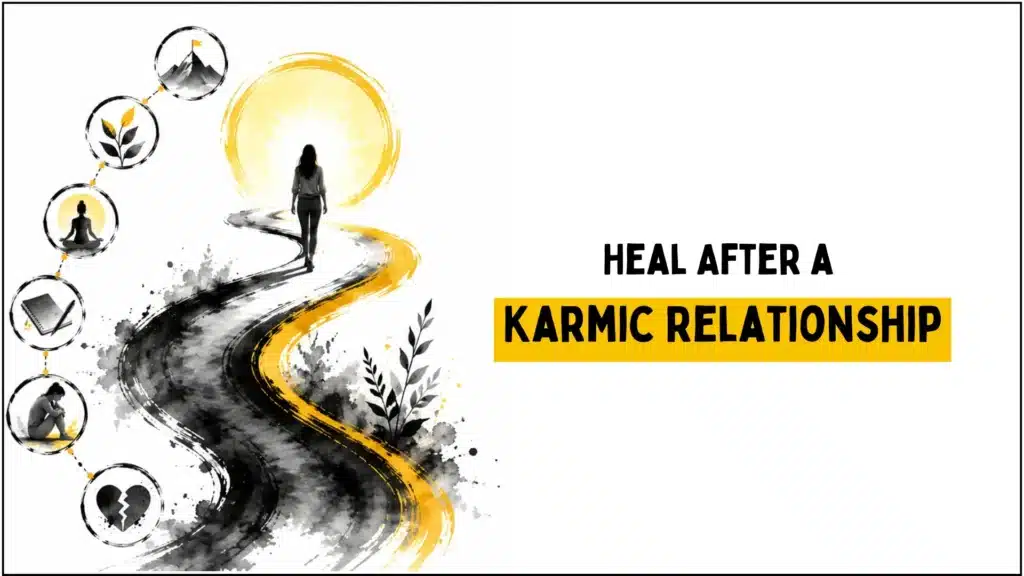
Healing after a karmic relationship involves self-reflection, emotional processing, and creating healthier patterns for future relationships.
First, it’s important to remember that healing is rarely immediate. Many karmic relationships leave a lasting emotional impact because they touch deep fears, hopes, and unresolved wounds. The goal is not to forget the experience but to learn from it.
Step 1: Accept the Lesson
Acceptance helps transform pain into personal growth.
Rather than focusing only on what went wrong, ask yourself what the relationship revealed. Every challenging relationship contains information about your needs, boundaries, values, and emotional patterns.
For example, if the relationship repeatedly challenged your self-worth, the lesson may involve developing confidence that doesn’t depend on another person’s approval.
Step 2: Stop Romanticizing the Connection
Clarity often begins when you separate reality from fantasy.
Moreover, many people continue holding onto an idealized version of the relationship long after it ends. Instead of remembering only the good moments, review the entire experience honestly.
For example, create two lists:
- What felt healthy and supportive
- What caused stress, anxiety, or emotional exhaustion
This exercise often creates a more balanced perspective.
Step 3: Identify Recurring Patterns
Recognizing patterns helps prevent repeating the same lessons.
Many karmic relationships reveal recurring emotional themes. These patterns may include:
- Fear of abandonment
- People-pleasing behavior
- Difficulty setting boundaries
- Attraction to emotionally unavailable partners
- Seeking validation from others
Once identified, these patterns become much easier to address.
Step 4: Focus on Self-Growth
Personal growth is often the greatest gift a karmic relationship provides.
Instead of asking, “Why did this happen to me?” consider asking, “What is this experience teaching me?”
That small shift can completely change the healing process.
Step 5: Create New Relationship Standards
Healthy standards help prevent future karmic cycles.
After healing, many people realize they ignored important red flags. Use that awareness to define what you truly want in future relationships.
For example:
- Consistent communication
- Emotional maturity
- Mutual respect
- Shared values
- Healthy conflict resolution
These standards become your roadmap moving forward.
Practical Exercises for Understanding a Karmic Relationship
Self-reflection exercises help uncover the deeper lessons hidden within a karmic connection.
Let’s explore several simple practices you can use.
Relationship Reflection Exercise
Answer these questions honestly:
- What attracted me to this person initially?
- What emotions appeared most often during the relationship?
- Which conflicts repeated themselves?
- What did this relationship teach me about myself?
- What boundaries do I need moving forward?
Many people discover surprising insights when they write their answers instead of simply thinking about them.
The Trigger Journal Method

Journaling emotional triggers helps reveal underlying patterns.
Create three columns:
| Trigger | Emotional Reaction | Possible Lesson |
|---|---|---|
| The partner ignored the message | Anxiety | Fear of abandonment |
| Argument about boundaries | Anger | Need stronger limits |
| Feeling rejected | Sadness | Self-worth work needed |
Over time, patterns become easier to recognize.
Self-Awareness Checklist
Ask yourself:
- Do I feel emotionally safe in this relationship?
- Am I compromising my values?
- Are the same problems repeating?
- Do I feel more empowered or more drained?
- Am I growing in healthy ways?
The answers often provide valuable clarity.
Can a Karmic Relationship Become Healthy?
A karmic relationship can become healthier if both people actively address the underlying patterns causing conflict.
However, this outcome is not guaranteed.
Many karmic relationships end because one or both individuals resist the growth required to break old cycles. Sustainable change requires self-awareness, accountability, and consistent effort.
For example, if communication problems repeatedly create conflict, both partners must commit to developing healthier communication habits. Without change, the same pattern typically continues.
Signs a Karmic Relationship Is Becoming Healthier
Positive indicators include:
- Fewer recurring arguments
- Greater emotional accountability
- Improved communication
- Respect for boundaries
- Less emotional volatility
- More mutual support
When these signs appear consistently, the relationship may be evolving beyond its original karmic dynamic.
Are Karmic Relationships Always Toxic?
Karmic relationships are not always toxic, but they are often emotionally challenging.
This is one of the biggest misconceptions surrounding the topic.
A karmic relationship becomes unhealthy when repeated lessons turn into repeated harm. Emotional growth should never require tolerating abuse, manipulation, or mistreatment.
Healthy growth involves:
- Honest communication
- Mutual respect
- Emotional safety
- Personal accountability
Unhealthy dynamics involve:
- Emotional manipulation
- Constant instability
- Fear-based attachment
- Repeated boundary violations
Understanding this distinction is essential.
Can You Marry a Karmic Partner?
Yes, some people marry karmic partners, although the relationship’s long-term success depends on growth and compatibility.
Many spiritual teachers suggest that karmic relationships are often temporary. However, there are exceptions.
If both individuals learn the lessons being presented and create healthier relationship habits, the partnership may continue successfully.
The real question is not whether the person is a karmic partner.
The better question is:
“Is this relationship becoming healthier over time?”
The answer often provides more clarity than any spiritual label.
What Happens After a Karmic Relationship Ends?
After a karmic relationship ends, many people experience a period of healing, self-discovery, and personal transformation.
Initially, the ending may feel confusing. The emotional intensity can make it difficult to understand why the relationship happened.
Over time, however, many people notice important changes:
- Increased self-awareness
- Stronger boundaries
- Better relationship choices
- Improved emotional resilience
- Greater confidence
- Clearer life direction
The lessons often become visible only after enough time has passed.
The Hidden Gift of a Karmic Relationship
The greatest value of a karmic relationship is often the person you become afterward.
While the experience may feel painful in the moment, many people later recognize it as a turning point that helped them grow into a stronger and more self-aware version of themselves.
Conclusion: What Your Karmic Partner Was Really Teaching You
The karmic relationship that once consumed you was not a detour from your growth. It was the path. Every intense conflict, every midnight spiral, every inexplicable reunion was pointing at something that needed your attention. Not the other person. You.
That’s the quiet truth at the center of every karmic bond: they don’t come to complete you. They come to reveal where you are not yet complete within yourself.
And once you can see that once the lesson is no longer hidden inside the relationship’s chaos, you are free. Not just from that person, but from the pattern that drew them to you in the first place.
You don’t have to be grateful to the person who hurt you. But you can be grateful for who you are becoming because of what they activated. That version of you, clearer, more honest, more rooted in your own worth, is the real legacy of the karmic relationship.
The cycle ends when you do. And then something new can begin.
FAQ’s About Karmic Partners
1. Can a karmic partner be your true love?
A. A karmic partner can feel like true love because of the intensity of the connection. However, the primary purpose is usually growth and learning rather than long-term compatibility.
2. How long do karmic relationships last?
A. Karmic relationships can last anywhere from a few months to many years. Their duration depends on the individuals involved and the lessons being learned.
3. How do I know if someone is a karmic partner?
A. Common signs include intense attraction, recurring conflict, emotional highs and lows, repeating patterns, and significant personal growth.
4. Can a karmic partner come back?
A. Yes. Many karmic relationships involve repeated separations and reunions until the underlying lesson is fully understood.
5. Is a karmic relationship the same as a soulmate relationship?
A. No. Soulmate relationships are generally associated with harmony and mutual support, while karmic relationships focus more heavily on growth through challenges.
6. Can a karmic relationship become a soulmate relationship?
A. In some cases, yes. If both people evolve, heal old patterns, and create healthier dynamics, the relationship may transform
Reviewed by: Universe Message Editorial Team
Spirituality, Personal Development, and Relationship Content Review
Disclaimer: This article was initially drafted using AI assistance. However, the content has undergone thorough revisions, editing, and fact-checking by human editors and subject matter experts to ensure accuracy. Spiritual concepts discussed in this article reflect common interpretations and beliefs and should not be considered professional psychological, medical, or relationship advice.

I’m Joe, the voice behind this blog. I write about signs, thoughts, and moments that don’t feel random. Simple things that somehow seem to carry a deeper meaning. This space is for anyone who feels there’s more to life than what we see on the surface. Through articles on spirituality, self-discovery, manifestation, and personal growth, I aim to help readers explore the messages, patterns, and connections that may be guiding their journey.