
You already talk to your loved one in quiet moments in the car, before bed, or when something reminds you of them. What you may not realize is that these instincts are the foundation of real, practiced techniques for spiritual connection that many grieving people use intentionally, not just by accident.
This guide walks you through specific, gentle practices from meditation to ritual to dream work that can help you feel closer to them, starting today.
Table of Contents
Key Takeaways
- Spiritual connection with a deceased loved one refers to intentional practices, such as meditation, ritual, or reflection, used to feel their continued presence or maintain an emotional bond.
- Grief researchers describe this as maintaining a “continuing bond,” a normal and often healthy part of long-term grieving rather than a sign of being “stuck.”
- Common connection methods include meditation, dream incubation, letter-writing, memory rituals, and creating dedicated physical spaces like altars or memory boxes.
- Many people report noticing “signs”, recurring numbers, songs, animals, or scents that they interpret as messages, though interpretation is deeply personal.
- Consistency matters more than the specific method; brief daily or weekly practices tend to feel more meaningful over time than sporadic attempts.
- Spiritual connection practices can complement, but should not replace, professional grief support if someone is struggling with prolonged or complicated grief.
- You can start with one simple, low-pressure practice today, such as five minutes of quiet reflection or writing an unsent letter.
What Does It Mean to Spiritually Connect With Someone Who Has Passed Away?
Spiritual connection with someone who has passed away refers to intentional practices, such as meditation, ritual, or reflective communication, used to maintain an emotional and spiritual bond with a deceased loved one.
It is not necessarily about proving an afterlife exists. Instead, it is about creating space in your daily life where the relationship continues, even though the physical presence is gone.
For example, some people picture a loved one’s face during a quiet moment and mentally share an update about their day. Others feel a sense of calm or recognition when a specific song plays and choose to interpret it as a moment of closeness rather than a coincidence. Both are forms of spiritual connection, even though they look completely different on the surface.
This practice sits at the intersection of psychology and spirituality. In psychology, it is closely related to what’s known as continuing bonds theory, the idea that an ongoing relationship with someone who has died can be healthy, rather than something you’re supposed to “get over.”
Read Also: You Can’t Stop Thinking About Them? It Might Be a Karmic Partner
Is It Normal to Feel a Deceased Loved One’s Presence?
Yes, it is normal to feel a deceased loved one’s presence, and this experience is well documented across grief research and personal accounts.
Many bereaved people describe a felt sense of closeness, sometimes fleeting, sometimes vivid, particularly in the first year after a loss and often around anniversaries or meaningful dates.
Continuing bonds theory, introduced by researchers Klass, Silverman, and Nickman in their 1996 book Continuing Bonds: New Understandings of Grief, reframed this experience.
Rather than treating an ongoing sense of connection as unhealthy attachment, the theory describes it as a natural adaptation, a way of relocating the relationship rather than ending it.
This shift in understanding gave millions of grieving people permission to keep talking to, thinking about, and feeling connected to those they’ve lost.
Why Spiritual Connection Matters in the Grieving Process
Spiritual connection matters in the grieving process because it offers a sense of continuity, comfort, and meaning at a time when loss can otherwise feel like total rupture. Grief is not only about accepting an absence; it’s also about figuring out how the relationship continues in a new form.
First, these practices can reduce feelings of isolation. Grief can feel intensely lonely, especially once the initial wave of support from friends and family fades.
A five-minute ritual, such as lighting a candle, saying a loved one’s name out loud, or writing them a short note, can restore a felt sense of relationship on the hardest days.
Second, spiritual connection practices provide agency during a period that otherwise feels completely out of your control. You cannot bring someone back, but you can choose to sit with their photo for ten minutes, or set an intention before sleep to dream about them. That small amount of choice matters.
At the same time, it’s worth being honest: these practices are not a cure for grief, and they’re not meant to be. For more on distinguishing everyday grief from grief that needs additional support, see “signs of complicated grief to watch for”, which is covered in more detail later in this guide.
What Are Common Signs That a Loved One Is Reaching Out From Beyond?

Common signs that people associate with a deceased loved one reaching out include recurring numbers, specific songs, particular animals or birds, meaningful scents, and vivid dreams.
These signs are subjective by nature; there is no universal checklist, but certain patterns show up again and again in personal accounts.
- Repeating numbers, such as seeing a loved one’s birthdate or a meaningful number sequence at unexpected moments
- Songs, especially ones tied to a specific shared memory, playing unprompted on the radio or in a public space
- Animals or birds, like a cardinal, butterfly, or dragonfly, appearing at a significant moment (a funeral, a birthday, a hard day)
- Scents, such as a perfume, cologne, or a favorite food smell, with no obvious source
- Electrical flickers, like lights or electronics behaving unusually, which some interpret as a form of contact
- Vivid, “visitation-style” dreams that feel more real or emotionally resolved than typical dreams
For example, someone who lost their mother might notice her favorite flower, gardenias, blooming unexpectedly out of season, and choose to receive that as a small hello.
Whether or not these moments have a literal spiritual cause, treating them as meaningful can be part of the connection practice itself; the noticing matters as much as the explanation.
How to Create a Ritual or Sacred Space for Connection
Creating a ritual or sacred space for connection involves setting aside a consistent physical location and a repeatable set of actions dedicated to remembering and communicating with a deceased loved one. This doesn’t require a large room or elaborate setup; a shelf, a corner of a dresser, or even a small box can work.
To build a simple sacred space, start with the following steps:
- Choose a small, consistent spot – a shelf, windowsill, or table corner.
- Add 2-4 meaningful objects: a photo, a handwritten note, a piece of jewelry, or a favorite item.
- Include something sensory, such as a candle, a scent they loved, or a small dish for offerings like flowers.
- Decide on a simple, repeatable action – lighting the candle, saying their name, or sitting quietly for a set amount of time.
- Return to the space on a schedule that feels sustainable, whether that’s daily, weekly, or on meaningful dates.
For example, a person who lost a spouse might keep a small photo, his reading glasses, and a candle on a bedside shelf, lighting the candle each night before bed as a way of saying goodnight.
This action, however brief, can “build a home altar for remembrance” and turn into a stabilizing part of a daily routine.
Ritual matters because it creates structure around grief, which otherwise can feel formless and unpredictable. By returning to the same small act, you give your mind and body a signal that this moment is set apart for connection.
Read Also: Why You Feel Drained Around Certain People (Energy Explained)
How Do You Meditate to Connect With a Deceased Loved One?
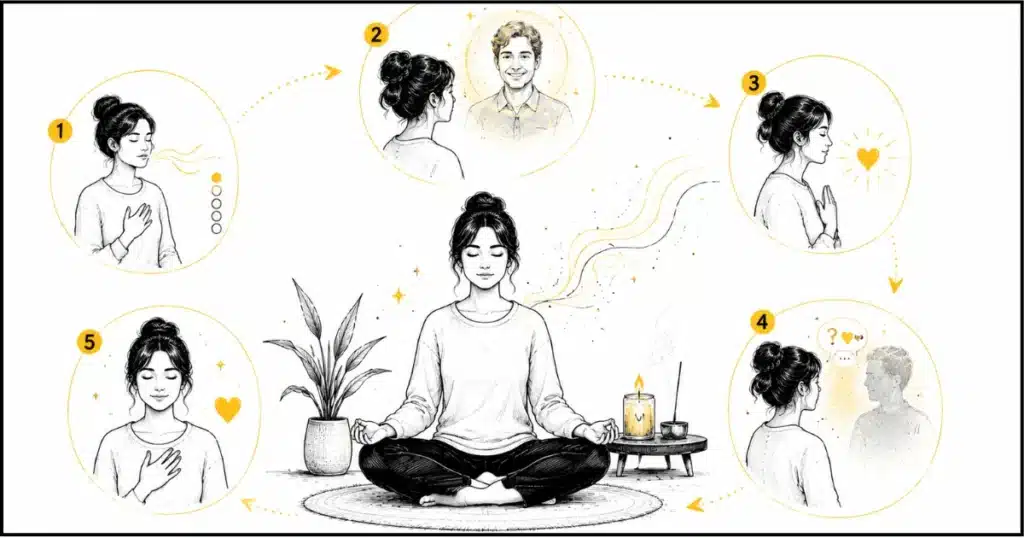
You meditate to connect with a deceased loved one by using a short, structured practice that combines physical stillness, breath, and visualization of the person you’re trying to reach.
Unlike general mindfulness meditation, connection meditation is intentionally directed toward memory and presence, rather than emptying the mind.
A Simple Meditation Script for Beginners
- Sit comfortably and close your eyes. Take five slow breaths, letting your shoulders drop with each exhale.
- Picture your loved one clearly: Their face, their posture, a specific moment you remember well.
- Mentally say hello, or simply notice the feeling that comes up when you picture them.
- Ask a question, share an update, or simply sit with their image for one to three minutes.
- Before opening your eyes, thank them and take one more slow breath to close the practice.
This can be done in as little as five minutes and works well first thing in the morning or right before bed, when the mind is naturally quieter. For more structured options, “guided meditation scripts for grief” can walk you through longer, audio-guided versions of this same practice.
Why Visualization Works, Even If You’re Skeptical
Visualization works because it activates the same emotional and sensory memory centers used when we’re physically near someone we love. This can produce genuine feelings of comfort and closeness, regardless of one’s specific beliefs about an afterlife.
This means the practice can be meaningful even for people who approach it from a secular or uncertain standpoint.
Can You Communicate With the Dead Through Dreams?
Many people report a sense of communication with the dead through dreams, particularly through a technique called dream incubation. Dream incubation for grief involves setting a clear intention before sleep, such as mentally asking to see or hear from a loved one to increase the likelihood of dreaming about them.
To try dream incubation, write a short note to your loved one before bed, or simply say silently, “I hope to see you tonight.” Keep a notebook by your bed so you can record any dream immediately upon waking, since dream memory fades quickly. “Interpreting dreams about lost loved ones” can help you make sense of symbolism if the dream feels significant but unclear.
Dreams that feel unusually vivid, calm, or emotionally resolved are sometimes described as “visitation dreams” by grievers, distinguishing them from ordinary dreams.
There is no scientific consensus on whether these dreams involve actual contact, but psychologically, they often serve an important function: allowing the dreamer to say something unsaid, receive reassurance, or simply spend time with the person again.
Journaling, Letter-Writing, and Dream Work as Connection Practices
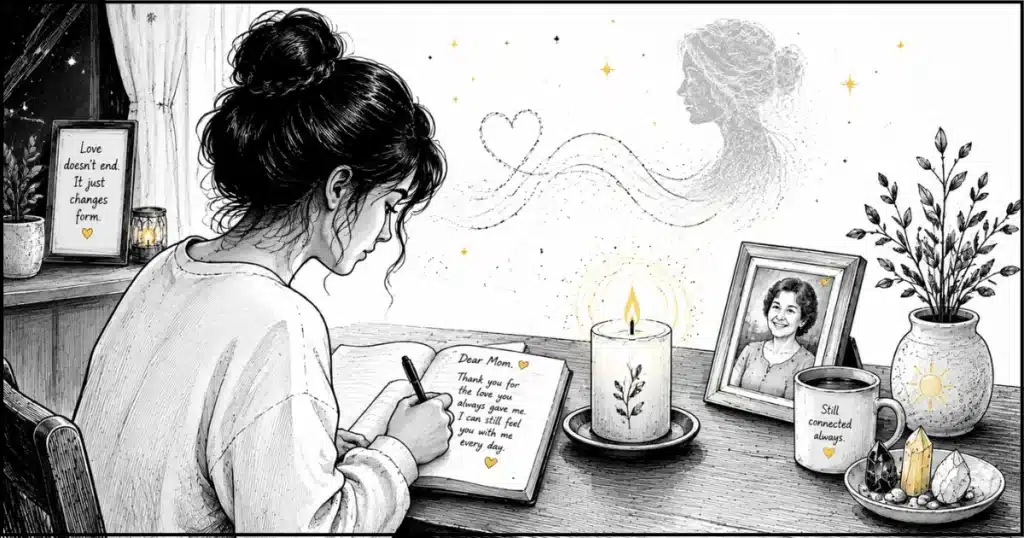
Journaling and letter-writing are two of the most accessible spiritual connection practices because they require no special setup just a pen, paper, and a few honest minutes. Writing to a deceased loved one allows you to say things left unsaid, process complicated emotions, and maintain an ongoing “conversation,” even without a reply.
What Should You Write in a Letter to a Deceased Loved One?
You can write a letter to a deceased loved one about anything you’d say if they were still here: an update on your life, an apology, a thank you, or simply how much you miss them.
There is no correct format. Some people write letters that they burn, bury, or keep in the sacred space described earlier, treating the act of writing itself as the connection point rather than needing a response.
A useful structure includes:
- An opening, addressing them directly by name or nickname
- An update, sharing something happening in your life right now
- An unsent feeling, something you didn’t get to say, or want to say again
- A closing, such as “I love you” or “talk soon”
For example, someone might write a short letter every year on their loved one’s birthday, creating a growing record of their evolving relationship with grief itself. “How to start a grief journal” offers prompts if a blank page feels intimidating.
Read Also: Why You Suddenly Feel Different From Everyone Around You
Tools, Objects, and Practices That Can Support Connection
Certain tools and objects can support spiritual connection by giving structure to practices that might otherwise feel abstract, including memory boxes, altars, music playlists, and professional mediums for those who want additional guidance.
| Tool / Practice | What It Involves | Best For |
|---|---|---|
| Memory box | A physical container of letters, photos, and keepsakes | People who want a private, portable connection point |
| Home altar | A dedicated shelf or space with photos and meaningful objects | People who want a daily visual ritual |
| Playlist of shared songs | A curated list of music tied to the relationship | People who connect through sound and memory |
| Scent (candle, perfume, cologne) | Reintroducing a familiar smell during quiet moments | People who respond strongly to sensory memory |
| Grief journal | A dedicated notebook for letters and reflections | People who process emotion through writing |
| Professional medium or spiritual counselor | A guided session with a trained practitioner | People wanting structured, facilitated communication |
If you choose to explore a professional medium, look for practitioners who are transparent about their process, avoid making guaranteed promises, and prioritize your emotional well-being over dramatic claims.
This isn’t a requirement for spiritual connection; many people never use one, but it can be a helpful option for those who want additional support.
How Often Should You Practice Spiritual Connection Rituals?
There is no fixed rule for how often to practice spiritual connection rituals, but consistency matters more than frequency or duration. A short daily practice, such as two minutes of quiet reflection, tends to feel more grounding over time than an occasional, longer ritual.
That said, some people prefer weekly or monthly rituals tied to specific days, such as Sundays or the date of the month someone passed. As such, it’s worth experimenting with a rhythm and adjusting based on what actually feels sustainable, rather than forcing a schedule that starts to feel like an obligation.
What’s Next: Building a Sustainable Spiritual Practice Over Time
Building a sustainable spiritual practice over time starts with choosing one method, practicing it consistently for a few weeks, and adjusting based on what genuinely brings comfort rather than what you feel you “should” be doing.
- Pick one practice from this guide: meditation, letter-writing, or a small altar rather than trying all of them at once.
- Set a low bar. Five minutes, once a day or once a week, is enough to start.
- Notice what resonates. Some methods will feel meaningful immediately; others won’t, and that’s useful information, not failure.
- Revisit the practice around anniversaries. “Coping with the anniversary of a loved one’s death” offers specific ideas for these harder dates.
- Check in with yourself honestly. If grief starts to feel unmanageable rather than simply painful, that’s a sign to add professional support.
When Should You Consider Seeing a Grief Counselor Instead of (or Alongside) Spiritual Practices?
You should consider seeing a grief counselor if grief significantly interferes with your daily functioning for an extended period, rather than gradually easing with time.
Prolonged or complicated grief, recognized as Prolonged Grief Disorder in the DSM-5-TR (2022), is marked by intense yearning or preoccupation with the deceased that persists and significantly interferes with daily life.
Spiritual connection practices are not a substitute for professional care in these cases; they work best alongside it. If you’re unsure where to start, “Finding a grief support group near you” and “Choosing a grief counselor or therapist” are useful first steps.
Is It Healthy to Maintain an Ongoing Bond With Someone Who Has Died?
!["Daily reflection practice for spiritual connection with a deceased loved one"]](https://universemessage.blog/wp-content/uploads/2026/08/Is-It-Healthy-to-Maintain-an-Ongoing-Bond-With-Someone-Who-Has-Died-1024x538.webp "How to Spiritually Connect With Someone Who Passed Away: The Ultimate Guide 6")
Yes, it is generally considered healthy to maintain an ongoing bond with someone who has died, according to continuing bonds theory, provided the relationship evolves rather than keeping you frozen at the moment of loss.
Healthy continuing bonds tend to include acceptance that the person is gone, alongside an ongoing emotional relationship, not denial that the loss occurred.
By contrast, a bond becomes concerning when it prevents someone from engaging with present-day life, relationships, or responsibilities.
This means occasional conversations with a photo, an annual letter, or a five-minute meditation are not signs of being “stuck”; they’re a normal expression of love that continues past death.
Conclusion
Spiritual connection with someone who has passed away isn’t about proving anything; it’s about giving your relationship a place to continue.
Whether that looks like five quiet minutes of meditation, a letter you’ll never send, or a small shelf with their photo and a candle, the specific method matters far less than showing up for it consistently. Start small: pick one practice from this guide, try it today, and let it grow into whatever feels most like them.
Frequently Asked Questions
1. Does everyone experience signs from deceased loved ones?
A. No, not everyone notices or interprets signs the same way, and that’s completely normal. Some people are highly attuned to symbolic moments, while others connect more through memory, ritual, or conversation instead.
2. Can spiritual connection practices help with sudden or traumatic loss?
A. Yes, these practices can help with sudden or traumatic loss, though grief in these cases often benefits from professional support alongside spiritual practices, given the added complexity of trauma.
3. Is it okay to talk out loud to someone who has passed away?
A. Yes, talking out loud to someone who has passed away is a common and healthy practice, often described by grief researchers as part of maintaining a continuing bond.
4. What if I don’t feel anything during meditation or ritual?
A. It’s common to feel nothing at first, especially early in grief or if you’re new to these practices; consistency over several weeks, rather than one attempt, tends to produce a stronger sense of connection.

I’m Joe, the voice behind this blog. I write about signs, thoughts, and moments that don’t feel random. Simple things that somehow seem to carry a deeper meaning. This space is for anyone who feels there’s more to life than what we see on the surface. Through articles on spirituality, self-discovery, manifestation, and personal growth, I aim to help readers explore the messages, patterns, and connections that may be guiding their journey.