

You thought about something small. Maybe it was a song you hadn’t heard in years. Then it played on the radio within hours.
Or you thought about someone you hadn’t spoken to in months. Then they texted you out of nowhere.
Coincidence? Maybe. But what if there’s actually something real happening beneath the surface? What if your thoughts, even the small ones, are doing more work than you realize? This article breaks down what science, psychology, and human behavior research say about thoughts turning into reality, and why so many people are noticing it more than ever.
Table of Contents
Why Do Small Thoughts Feel Like They’re Coming True?
The short answer is this: your brain is wired to notice what you think about. The more you focus on something, the more your brain works to find proof of it in the world around you.
This isn’t magic. It’s neuroscience.
According to research in cognitive psychology, the human brain processes roughly 6,200 thoughts per day (Queen’s University, 2020). Most of these thoughts are repetitive. And what we think about repeatedly tends to influence how we see, react to, and move through the world.
When a thought starts “coming true,” it’s often less about the universe conspiring and more about your mind filtering your reality in a new way.
👉 Related Article: Why You Suddenly Prefer Being Alone – Here’s What’s Really Going On
What Is the Reticular Activating System (RAS)?
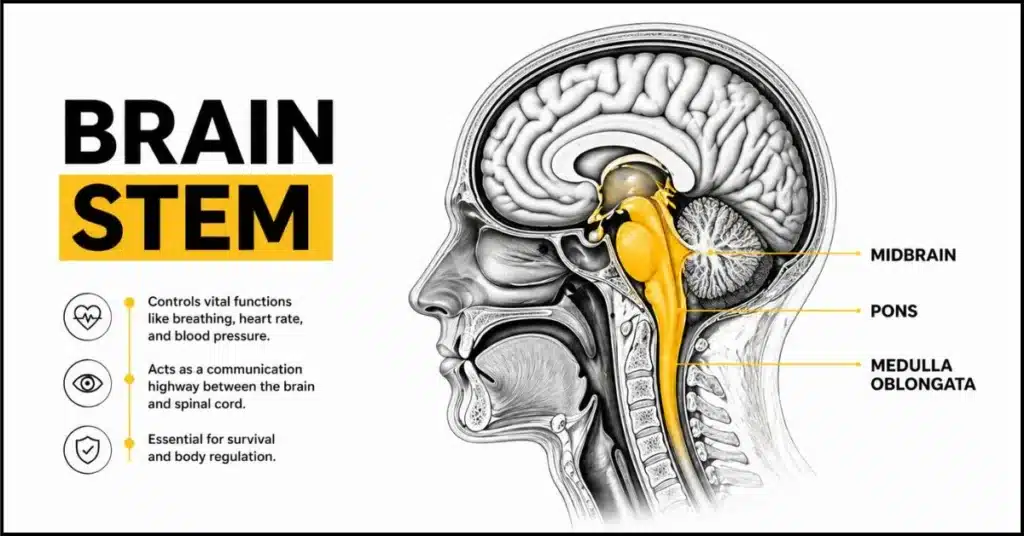
Here’s where things get really interesting. Your brain has a built-in filter called the Reticular Activating System, or RAS. It sits at the base of your brainstem and acts like a gatekeeper for the information that reaches your conscious awareness.
The RAS receives millions of signals every second from your senses, but it only lets through what it considers relevant to you.
Here’s the key: it decides relevance based on your dominant thoughts, beliefs, and emotions.
So when you start thinking about a red car, you suddenly notice red cars everywhere. They were always there. You just weren’t filtering for them before.
This is why your thoughts appear to “turn into reality.” Your RAS starts collecting evidence that matches what your mind is focused on.
The National Institutes of Health (NIH) has published multiple studies on selective attention that confirm this pattern. What you focus on, you find. What you find, you tend to act on. And what you act on produces real-world results.
The Psychology of Self-Fulfilling Prophecy
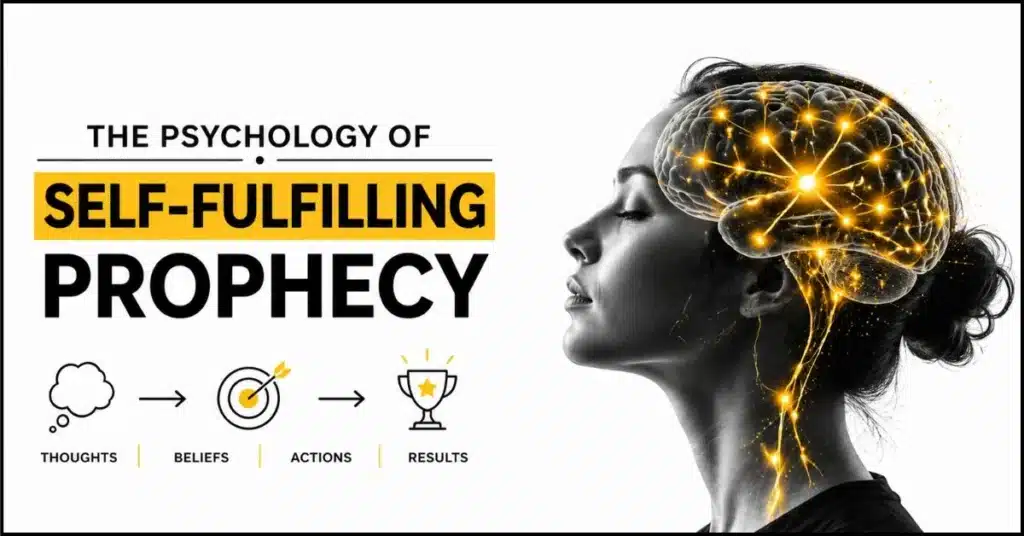
The concept of the self-fulfilling prophecy was introduced by sociologist Robert K. Merton in 1948. The idea is simple but powerful: a belief, once held, leads to behaviors that make that belief come true.
Example: If you believe a job interview will go poorly, you go in with low confidence. Your body language shifts. You give hesitant answers. And yes, the interview goes poorly. Your thought created the outcome.
This works in positive directions, too. Research from Stanford University has shown that people who hold optimistic beliefs about outcomes tend to put in more effort, stay persistent longer, and achieve better results.
Your thoughts don’t just predict your reality. They participate in creating it.
Is There a Spiritual Side to Thoughts Turning Into Reality?
Many people believe that thoughts carry energy and that focused intention can attract corresponding experiences. This belief spans cultures and centuries, from ancient Hindu and Buddhist philosophy to modern concepts like the Law of Attraction.
The Law of Attraction, popularized in books like “The Secret” (2006), suggests that like attracts like: positive thoughts attract positive outcomes, and negative thoughts attract negative ones.
While mainstream science does not validate the Law of Attraction as a physical force, researchers at Harvard Medical School and the HeartMath Institute have found that positive emotional states, often produced through intentional thinking, do correlate with improved health outcomes, better decision-making, and stronger social connections.
Whether you lean toward the scientific explanation or the spiritual one, the result being observed is similar: intentional thinking changes outcomes.
👉 Related Article: How Manifestation Really Works – Know the Hidden Secrets
How Repetitive Thoughts Rewire Your Brain
Here’s a fact that might change how you see your own mind: your brain physically changes based on what you think about repeatedly.
This is called neuroplasticity. The brain forms new neural pathways in response to repeated thoughts, actions, and emotions. The more you think a thought, the stronger that neural pathway becomes. Eventually, that thought becomes a default.
Dr. Joe Dispenza, a neuroscientist and author of “Breaking the Habit of Being Yourself,” explains it this way: most people think the same thoughts every day, which keeps them in the same emotional state, which keeps them making the same choices, which keeps producing the same reality.
The good news? Neuroplasticity works in both directions. You can train your brain to think differently. And different thinking leads to different action. Different actions lead to different results.
What Types of Thoughts Are Most Likely to Become Reality?
Not all thoughts carry the same weight. Research in behavioral psychology points to a few key factors that make a thought more likely to turn into a real-world outcome:
Emotionally charged thoughts tend to be more impactful. Thoughts paired with strong feelings, whether fear, excitement, desire, or love, activate the limbic system and make stronger neural imprints.
Repeated thoughts become habits of mind. Habitually thinking something is possible makes you more likely to take action toward it.
Visualized thoughts are particularly powerful. Mental rehearsal, which involves vividly imagining an outcome, has been studied in elite athletes and found to activate the same brain regions as physically performing the action. A landmark study at the Cleveland Clinic (2004) found that people who mentally practiced finger exercises increased muscle strength by 22%, compared to 30% in those who did the exercises physically.
Written-down thoughts are also more likely to manifest. A study at Dominican University of California found that people who wrote down their goals were 42% more likely to achieve them.
Why Are You Noticing This More Right Now?
You’re not imagining it. Many people report an increase in thoughts “coming true” during periods of high stress, personal growth, or change. There are a few reasons this happens.
During emotionally intense periods, the brain is more alert, more focused, and more sensitive to patterns. This heightened state of awareness makes it feel like everything is connected and meaningful.
Additionally, when you’re going through a transformation in mindset, you start thinking in new ways. New thoughts lead to new choices. New choices lead to new experiences. And those new experiences feel almost magical because they’re so different from your old normal.
In other words, you’re not just noticing your thoughts manifesting. You’re actively living differently, and you’re only now paying attention to the connection between what you think and what shows up.
👉 Related Article: You Keep Noticing These Signs – Life Is About to Change for You
Practical Ways to Direct Your Thoughts Toward Better Outcomes

If thoughts really do shape reality in these measurable ways, then the obvious question is: how do you take control of yours?
Here are evidence-backed practices that help direct your thoughts more intentionally:
- Morning intention setting: Spend 5 minutes each morning deciding what you want to think about and feel during the day. This primes your RAS to filter for positive opportunities.
- Journaling: Writing your thoughts helps externalize them, making it easier to identify which thought patterns are helping you and which are holding you back.
- Visualization: Spend 2 to 3 minutes a day vividly imagining a desired outcome as if it’s already real. This is used by Olympic athletes and top executives alike.
- Mindfulness meditation: A 2014 meta-analysis published in JAMA Internal Medicine found that mindfulness meditation significantly reduces anxiety and depression, which are both driven by runaway negative thought patterns.
- Thought auditing: Ask yourself daily, “What am I thinking about most?” The answer usually predicts your mood, your actions, and your results.
The Connection Between Thoughts, Emotions, and Actions
This is the cycle that most people miss. Thoughts create emotions. Emotions drive behavior. Behavior creates outcomes.
Most people try to change their outcomes without changing their thoughts. That’s like trying to get a different answer while using the same math.
Research from the field of cognitive behavioral therapy (CBT), which is one of the most evidence-based psychological treatments in the world, is built entirely on this principle: change the thought, change the feeling, change the action, change the result.
The American Psychological Association recognizes CBT as the gold-standard treatment for anxiety, depression, and behavioral issues, precisely because shifting thought patterns produces measurable, real-world changes in a person’s life.
Are Some People More Prone to This Experience?

Yes, and this is backed by personality psychology research.
People who score high in “openness to experience,” one of the Big Five personality traits, tend to be more aware of patterns, more imaginative, and more likely to notice connections between their inner world and their outer experiences.
Highly intuitive people are also more likely to recognize thought-reality connections because they pay closer attention to subtle cues in their environment.
But here’s the important nuance: awareness of this phenomenon isn’t the same as it happening more to some people. It may simply be that some people are better at noticing it.
The thought-to-reality pipeline operates in everyone’s life. The difference is in who’s watching.
👉 Related Article: 21 Powerful Signs the Universe Is Trying to Tell You Something
5 Factual Insights to Know
- The human brain generates approximately 6,200 thoughts per day, according to research from Queen’s University (2020).
- Mental rehearsal activates the same neural pathways as physical practice, according to research published in the Journal of Neurophysiology.
- The Reticular Activating System is a real neurological structure that filters incoming information based on relevance and focus.
- Writing down goals increases the likelihood of achieving them by 42%, according to a study by Dr. Gail Matthews at Dominican University.
- Cognitive Behavioral Therapy, which is based on the thought-emotion-behavior loop, is endorsed by the APA, NHS, and WHO as an effective, evidence-based treatment.
Final Thoughts
The idea of thoughts turning into reality isn’t just feel-good philosophy. It’s rooted in measurable, observable science: the RAS, neuroplasticity, self-fulfilling prophecy, and behavioral psychology all point to the same conclusion.
What you think about consistently shapes what you notice, what you do, and ultimately what you create in your life.
That’s not magic. That’s just the mind doing what it was built to do.
The real question isn’t whether thoughts become reality. The question is: are you being intentional about which thoughts you’re feeding?
FAQ’s About Small Thoughts Turning Into Reality
1. Can thoughts actually turn into reality?
A. In a direct, magical sense, no. But through the mechanisms of the Reticular Activating System, neuroplasticity, selective attention, and behavioral psychology, thoughts absolutely influence actions, and actions create real outcomes. The connection is real, even if the mechanism is neurological rather than supernatural.
2. What does it mean when you think of something, and it happens?
A. This is often explained by confirmation bias and selective attention. You think about many things throughout the day. When one of them “happens,” it feels meaningful because your brain remembers the match and forgets the misses. That said, repeated thoughts do prime your behavior in ways that can make certain outcomes more likely.
3. Is the Law of Attraction scientifically proven?
A. The Law of Attraction as a metaphysical force is not scientifically proven. However, several of its proposed mechanisms, like visualization, positive thinking, and intention setting, have independent scientific support for improving outcomes in health, performance, and goal achievement.
4. How do I stop negative thoughts from becoming reality?
A. Practice cognitive reframing: when a negative thought arises, notice it, label it (“that’s anxiety talking”), and replace it with a more balanced perspective. Consistent mindfulness practice and CBT techniques are clinically proven to reduce the impact of negative thought patterns.
5. Why do I think about someone and then they contact me?
A. This is usually explained by confirmation bias. You think about many people many days. When someone contacts you shortly after you thought of them, you remember it vividly. When they don’t, you forget. It feels like a pattern because your brain is designed to seek patterns.
6. Can visualization really change outcomes?
A. Yes, within limits. Research shows that mental rehearsal strengthens neural pathways related to the visualized action. This improves performance in sports, presentations, and skill-building. Visualization works best when paired with real action, not used as a substitute for it.
Disclaimer: The spiritual and metaphysical aspects of this topic, including concepts like the Law of Attraction, are based on personal belief systems and are not scientifically proven mechanisms. This article presents both scientific and belief-based perspectives for informational purposes only. Readers are encouraged to form their own conclusions.

I’m Joe, the voice behind this blog. I write about signs, thoughts, and moments that don’t feel random. Simple things that somehow seem to carry a deeper meaning. This space is for anyone who feels there’s more to life than what we see on the surface. Through articles on spirituality, self-discovery, manifestation, and personal growth, I aim to help readers explore the messages, patterns, and connections that may be guiding their journey.