

You may have noticed something frustrating lately… you’ve been trying to manifest something, money, clarity, love, or a breakthrough, but nothing seems to shift. You’re doing the affirmations, thinking positively, maybe even visualizing every day… yet the results feel distant, almost unreachable.
At first, it feels strange because you’ve heard so many people say manifestation “just works.” Many people experience this phase when they begin exploring how manifestation works, and it creates a quiet doubt: What if I’m doing something wrong… or worse, what if this doesn’t work for me at all?
What most people don’t realize is this: manifestation is not about forcing outcomes, it’s about understanding the deeper connection between your thoughts, emotions, beliefs, and behaviors.
And once you see how it actually works… everything starts making a lot more sense.
Table of Contents
What Is Manifestation – And What It Is NOT
At its core, manifestation is the process of turning internal states (thoughts, beliefs, emotions) into external experiences. But it’s often misunderstood as something magical or instant.
From a psychological perspective, manifestation is closely tied to:
- Attention and focus
- Belief systems
- Emotional conditioning
- Behavioral patterns
It’s not about “thinking something once and getting it.”
It’s about repeatedly aligning your inner world with your outer actions.
👉 Read Also: Your Manifestation Feels Close – But Something Is Missing
How Manifestation Works (The Real Mechanism)
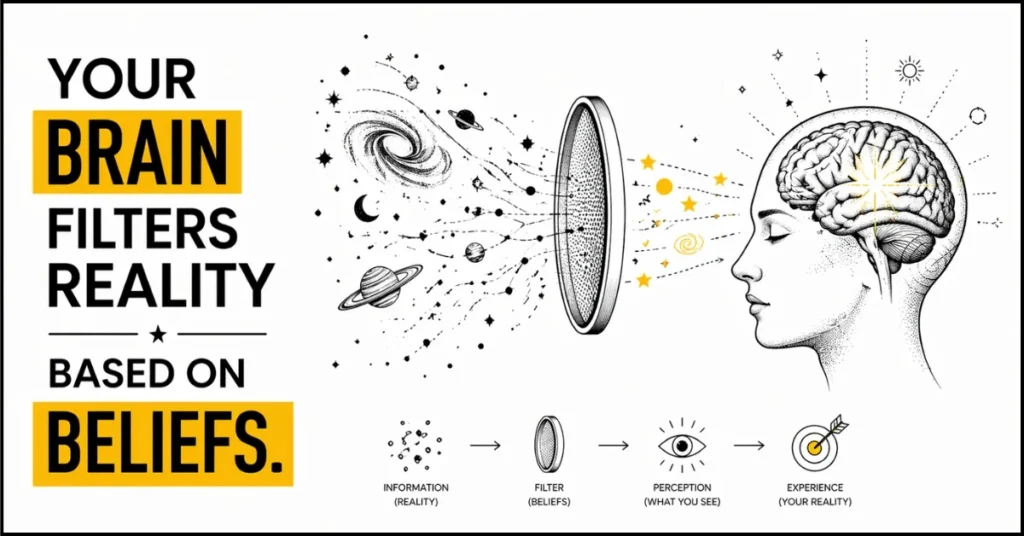
1. Your Brain Filters Reality Based on Beliefs
Based on how the subconscious mind works, your brain constantly filters information through what you already believe to be true.
This is linked to something called the Reticular Activating System (RAS), which determines what you notice and what you ignore.
For example:
- If you believe opportunities are rare → you won’t notice them
- If you believe you’re not “ready,” → you’ll unconsciously avoid action
- If you believe things work out → you’ll take chances others wouldn’t
Research on cognitive bias and belief systems supports this clearly (see insights from Psychology Today).
So manifestation isn’t creating something from nothing; it’s shifting what you’re able to see, choose, and act on.
2. Emotions Reinforce or Block Outcomes
This is where it gets surprising…
Most people think manifestation is about thoughts. But in reality, emotions carry more influence than thoughts.
You can say:
“I am successful.”
…but if you feel:
“I’m not good enough.”
Your emotional state wins.
Behavior patterns and belief systems play a key role here because your subconscious responds more to repeated emotional experiences than logical statements.
This is why forced positivity often fails; it doesn’t change your emotional baseline.
3. Identity Shapes Your Results
But here’s what most people misunderstand…
Manifestation is not about getting what you want.
It’s about becoming someone who naturally aligns with it.
There’s a big difference between:
- Wanting confidence
- Being a confident person
When your identity doesn’t match your desires, your actions will unconsciously sabotage your results.
I’ve seen this with people who say they want success, but hesitate every time an opportunity appears. Not because they don’t want it, but because their identity hasn’t caught up yet.
The Part Nobody Talks About: Why Manifestation Fails
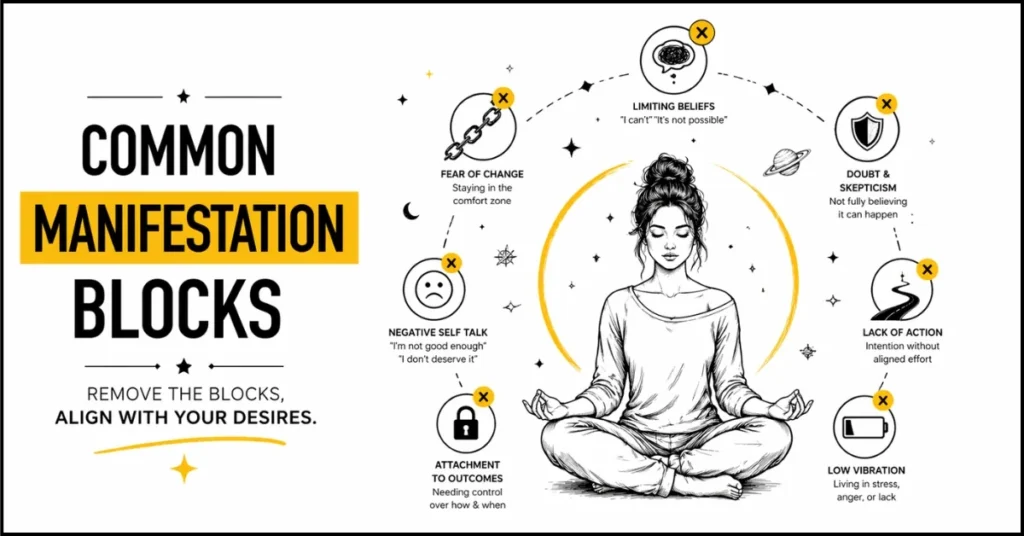
This is where most people get stuck and quietly give up.
Common Manifestation Blocks:
- Subconscious beliefs like “I’m not worthy.”
- Fear of change or responsibility
- Emotional attachment to outcomes
- Inconsistent actions
- Trying to “force” alignment
From a behavioral psychology standpoint, resistance often comes from familiarity. Your brain prefers known discomfort over unknown change.
This is explained well in behavioral conditioning research (see Verywell Mind).
So when you try to manifest something new, your system may resist, not because it’s impossible, but because it’s unfamiliar.
👉 Realated Article: Why Your Manifestation Feels Blocked (And How to Fix It Fast)
Emotional Alignment vs Forced Thinking
Many manifestation techniques focus heavily on “thinking positively.”
But emotional alignment is very different.
Forced Thinking:
- Repeating affirmations without belief
- Ignoring negative emotions
- Pretending everything is okay
Emotional Alignment:
- Acknowledging your current state
- Gradually shifting your perspective
- Building trust through small wins
The goal isn’t perfection, it’s consistency.
You don’t need to feel amazing all the time. You just need to feel slightly more aligned than before.
Action Is Where Manifestation Becomes Real
Here’s the part that often gets overlooked…
Manifestation is incomplete without action.
Your thoughts and emotions set direction, but your actions create movement.
For example:
- Thinking about success without action = no result
- Feeling confident without action = no evidence
- Visualizing without behavior change = no shift
Real-world behavior is the bridge between internal alignment and external reality.
👉 Related Article: Manifestation Quiet Phase – You’re Closer Than You Think
The Subtle Shift That Changes Everything
This is where it all starts to come together…
When you truly understand how manifestation works, you stop asking:
“Why isn’t this happening?”
And start asking:
“Who do I need to become for this to feel natural?”
That shift alone changes:
- Your decisions
- Your focus
- Your reactions
- Your persistence
And over time… your results.
Real-Life Example (Why Some People See Results Faster)
I’ve seen this pattern repeatedly…
Two people try the same manifestation techniques:
Person A:
- Focuses on outcomes
- Doubts the process
- Takes inconsistent action
Person B:
- Focuses on identity
- Adjusts beliefs gradually
- Takes small, consistent action
Person B almost always sees results faster, not because they’re “luckier,” but because their internal and external worlds are aligned.
External Perspective: Science Behind Manifestation
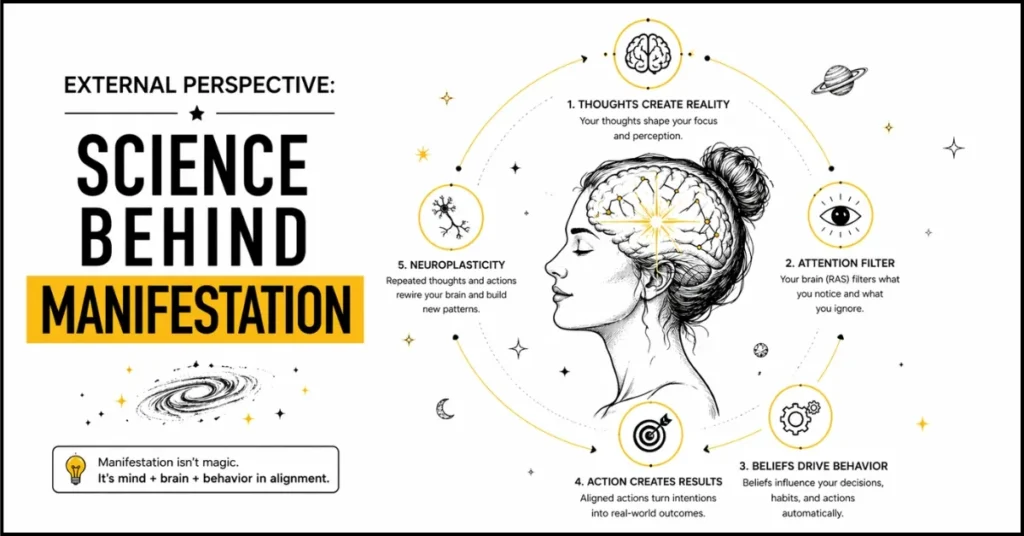
While manifestation is often described in spiritual terms, psychology provides grounded explanations:
- Cognitive Behavioral Theory shows that thoughts influence behavior
- Neuroplasticity shows that the brain adapts to repeated patterns
- Attention systems shape perception of opportunities
You can explore how thoughts and behaviors influence outcomes in this National Library of Medicine article on mindset and behavior.
This doesn’t make manifestation magical; it makes it understandable.
Final Thoughts
If you’ve been wondering how manifestation works, the answer isn’t hidden; it’s just deeper than most explanations.
It’s not about controlling reality instantly.
It’s about aligning your beliefs, emotions, and actions over time.
While manifestation is often described in spiritual terms, psychology shows that beliefs, attention, and behavior patterns strongly influence the outcomes we experience.
And maybe the real shift isn’t about getting what you want…
But becoming someone who naturally creates it.
FAQ’s About How Manifestation Really Works
1. Why is manifestation not working for me?
A. Often, it’s due to subconscious beliefs, emotional resistance, or lack of aligned action. It’s not just about thinking, it’s about internal consistency.
2. How long does manifestation take to work?
A. There’s no fixed timeline. It depends on belief shifts, emotional alignment, and consistent behavior over time.
3. What blocks manifestation the most?
A. Limiting beliefs, fear of change, and forcing outcomes are the most common blocks.
4. Can manifestation really change reality?
A. It doesn’t “magically” change reality, but it changes how you think, act, and respond, which influences your outcomes.
5. Do you need to believe fully for manifestation to work?
A. No. You don’t need perfect belief, just gradual improvement and consistency.

I’m Joe, the voice behind this blog. I write about signs, thoughts, and moments that don’t feel random. Simple things that somehow seem to carry a deeper meaning. This space is for anyone who feels there’s more to life than what we see on the surface. Through articles on spirituality, self-discovery, manifestation, and personal growth, I aim to help readers explore the messages, patterns, and connections that may be guiding their journey.