
Something is happening when you read a healing scripture out loud. Something shifts. The words land differently from ordinary text. Many people who have sat in hospital rooms, in seasons of grief, or in the quiet pain of something invisible have said the same thing: certain verses felt like they were written just for them, right at that moment.
This is not a coincidence. Whether you approach it through faith, spiritual energy, or the science of belief, healing scriptures carry a power that has been studied, sung, and spoken over sick bodies for thousands of years. And they still work today.
Table of Contents
What Are Healing Scriptures and Why Do They Matter?
Healing scriptures are Bible verses that speak directly to physical, emotional, and spiritual restoration. They are more than words on a page.
When spoken with faith, these scriptures function as declarations. They remind the mind and body of a deeper truth: that healing is available, that divine energy flows toward wholeness, and that your spirit was not designed to remain broken.
Research in psychoneuroimmunology, a field studied at institutions like Harvard Medical School, confirms that belief systems and mental states can influence immune response and pain perception. Pair that science with centuries of spiritual testimony, and the case for healing scriptures becomes both faith-based and evidence-aware.
👉 Read Also: Spiritual Warfare Meaning: What You Need to Know
The Most Powerful Healing Scriptures From the Bible
These are some of the most cited healing scriptures across faith traditions. They carry deep meaning and have been spoken over the sick, the grieving, the broken, and the recovering for centuries.
Exodus 15:26 – The God Who Heals
“I am the Lord who heals you.”
This is one of the shortest and most direct healing scriptures in the entire Bible. Just seven words. But those seven words carry the declaration that healing is not an accident; it is part of a divine identity. If healing belongs to God, and God is accessible through faith, then healing is available to you.
From a manifestation perspective, this scripture is a powerful anchor. When you are sick or struggling, repeating this verse shifts your inner narrative from “I am broken” to “Healing is my inheritance.”
Jeremiah 17:14 – A Personal Cry for Healing
“Heal me, Lord, and I will be healed; save me, and I will be saved, for you are the one I praise.”
This verse is intimate. It is a prayer spoken directly, with confidence. Notice it does not say “maybe” or “if you want to.” It says, “I will be healed.” That is the language of expectation, the exact energy that the law of attraction identifies as essential for manifestation.
Psalm 103:2-3 – Forgetting Nothing
“Praise the Lord, my soul, and forget not all his benefits, who forgives all your sins and heals all your diseases.”
This scripture connects emotional healing to physical healing. Forgiveness and restoration go together. Modern psychology confirms this: unresolved emotional wounds create chronic stress that the body eventually expresses as physical illness. This ancient scripture understood that connection thousands of years ago.
Isaiah 53:5 – Healing Through Sacrifice
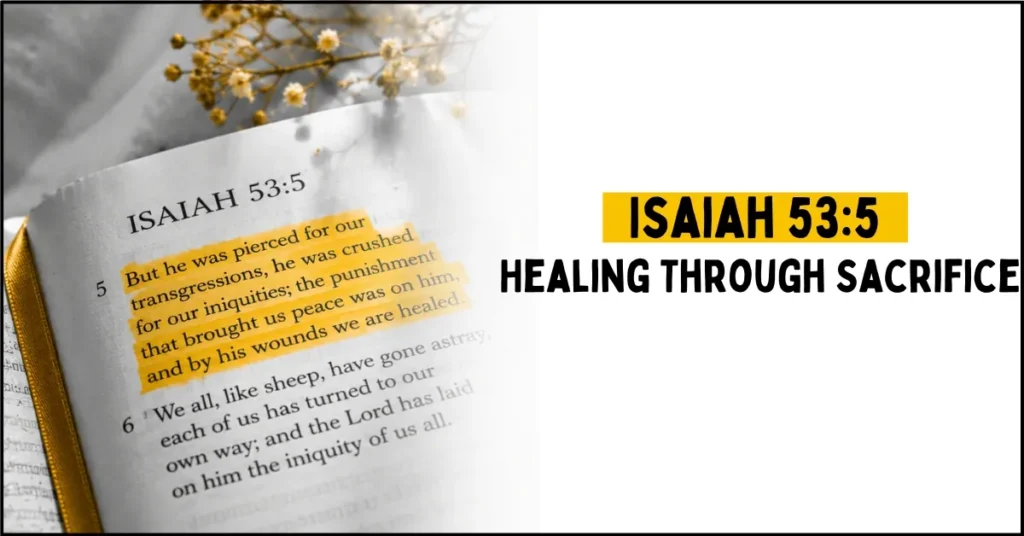
“But he was pierced for our transgressions, he was crushed for our iniquities; the punishment that brought us peace was on him, and by his wounds we are healed.”
For Christians, this is the cornerstone healing scripture. It establishes that healing has already been paid for; it exists, waiting to be received. This resonates powerfully with the law of attraction principle that what you seek already exists in the universe; you simply need to align with it.
Matthew 8:17 – He Took Our Infirmities
“He took up our infirmities and bore our diseases.”
This verse from the New Testament is a direct declaration of healing as a spiritual inheritance. It is widely used in healing prayer traditions and is spoken over people recovering from illness as a reminder of what has already been provided.
3 John 1:2 – Wholeness in Every Area
“Dear friend, I pray that you may enjoy good health and that all may go well with you, even as your soul is getting along well.”
This scripture beautifully ties together spiritual, emotional, and physical health. It does not separate them, and neither should we. Whole-person healing is the model here.
👉 Read Also: 111 Angel Number Meaning: This Is Not Random
Which Scriptures on Healing Are Best for the Sick?

When the body is suffering, specific scriptures for the sick carry extraordinary weight.
Psalm 103:2-3 says, “Praise the Lord, my soul, and forget not all his benefits – who forgives all your sins and heals all your diseases.” This is one of the most quoted healing scriptures for the sick because it links spiritual forgiveness and physical healing in the same breath.
Isaiah 53:5 is foundational: “By his wounds we are healed.” This verse is recited in prayer circles, hospitals, and homes around the world. It ties healing to an act already completed in the past tense, already done.
Matthew 4:23 confirms that healing was central to Jesus’s ministry: “Jesus went throughout Galilee, teaching in their synagogues, proclaiming the good news of the kingdom, and healing every disease and sickness among the people.” Every disease. Not some. Every.
How Do Scriptures About Healing Address Emotional Pain?
Spiritual healing is not only about the body. The Bible addresses the heart with equal tenderness.
Psalm 147:3 says, “He heals the brokenhearted and binds up their wounds.” This verse is one of the most comforting healing scriptures for those going through grief, betrayal, or loss.
Isaiah 41:10 carries reassurance that speaks to fear and anxiety: “So do not fear, for I am with you; do not be dismayed, for I am your God. I will strengthen you and help you.” Emotional suffering often comes wrapped in fear. This scripture directly addresses it.
Romans 8:28 offers a long view: “And we know that in all things God works for the good of those who love him.” This is a scripture of trust, the belief that even suffering is not wasted when aligned with a higher purpose.
How to Use Healing Scriptures Differently for Chronic Illness, Terminal Diagnosis, and Acute Sickness
- Acute illness: The nervous system is in alarm mode. Short, declarative scriptures work best (Exodus 15:26, Isaiah 53:5). The goal is to interrupt the fear spiral quickly. Long passages are harder to hold onto when pain or fever is active.
- Chronic illness: Extended suffering creates a different challenge – hope fatigue. People have prayed these verses for years. Here, scriptures about endurance, companionship in suffering (Psalm 23, Romans 8:18), and the long arc of redemption are more honest and sustaining than those promising immediate breakthrough.
- Terminal diagnosis: The entire frame shifts. Physical healing may not come, and pretending otherwise causes spiritual harm. Scriptures of peace, eternal perspective, and the absence of fear (John 14:1-3, Psalm 23:4) serve more faithfully here. Experienced hospice chaplains know this distinction intuitively.
- Mental and invisible illness: Scriptures for depression, anxiety, or trauma-based illness require a different delivery. The declarative “I am healed” posture can feel cruel or inaccessible to someone in a depressive episode. Lament scriptures (Psalm 88, Psalm 22) – the ones where the writer also cries out in confusion, often connect more authentically first.
- Illness in children vs. adults: Children receive scripture through story, repetition, and tone rather than theological meaning. Adults project their theological fears onto verses. Recognizing this distinction changes how parents use healing scriptures alongside their sick children.
Bible Scriptures on Healing and the Law of Attraction
There is a deep connection between ancient healing scriptures and modern spiritual principles like the law of attraction. Both operate on the same fundamental truth: what you speak, believe, and dwell on shapes your reality.
The law of attraction teaches that energy flows where attention goes. Healing scriptures direct attention toward wholeness, restoration, and divine favor. When you meditate on a scripture like Proverbs 4:22 – “For they are life to those who find them and health to one’s whole body,” you are not just reading. You are tuning your internal frequency to match what you are asking for.
This is not mysticism disconnected from Scripture. Philippians 4:8 is itself a law-of-attraction principle in biblical language: “Finally, brothers and sisters, whatever is true, whatever is noble, whatever is right, whatever is pure, whatever is lovely, whatever is admirable, if anything is excellent or praiseworthy, think about such things.”
What you consistently think about, you begin to vibrate toward. Healing scriptures give the mind a worthy thing to dwell on.
How to Use Healing Scriptures Effectively
Knowing healing scriptures is one thing. Using them in a way that transforms your experience is another.
Here are key practices drawn from both faith tradition and spiritual science:
- Speak them out loud. There is power in the auditory experience of hearing your own voice declare truth over your life. The vagus nerve, which influences the body’s stress response, is stimulated by vocalization.
- Write them down. Journaling scriptures reinforces memory and deepens personal connection to the text.
- Meditate on one at a time. Rather than rushing through a list, sit with one scripture until it becomes personal. Let it speak to your specific situation.
- Pray them as declarations, not requests. Instead of “Lord, if it be your will,” say “By his wounds, I am healed.” The shift from petition to declaration changes your internal posture.
- Combine with gratitude. Spiritual traditions worldwide recognize gratitude as one of the highest vibrational states. Pairing a healing scripture with genuine thankfulness amplifies its effect.
👉 Read Also: 432 Hz Benefits: Why It Feels Different to Your Soul
Healing Scriptures for Specific Needs
Different seasons call for different scriptures. Below are healing scriptures organized by need.
- For physical illness: Isaiah 53:5, Psalm 103:3, Exodus 15:26, James 5:15
- For emotional healing: Psalm 147:3, Isaiah 41:10, Psalm 34:18
- For anxiety and fear: Philippians 4:6-7, 2 Timothy 1:7, Isaiah 26:3
- For strength during recovery: Isaiah 40:31, Joshua 1:9, Psalm 46:1
- For children who are sick: Mark 10:14, Matthew 18:3, Psalm 91:11
What Science Says About Faith and Healing
This article would be incomplete without acknowledging what research continues to reveal about the body-mind-spirit connection.
A landmark study published in the Archives of Internal Medicine found that patients with stronger religious beliefs and spiritual practices had better health outcomes and recovery rates. Researchers at the National Institutes of Health (NIH) have also funded studies into how spiritual practices affect cortisol levels, immune markers, and pain management.
Dr. Herbert Benson of Harvard Medical School coined the term “relaxation response” and found that belief-based practices, including prayer and meditation on scriptural texts, could measurably reduce stress hormones and lower blood pressure.
This does not reduce healing scriptures to a relaxation technique. But it does affirm that what the Bible has said for millennia, science is beginning to confirm: wholeness involves every dimension of the human person.
A Daily Healing Scripture Practice
If you are new to using scripture for healing, start simply. Pick one verse. Speak it each morning before your feet hit the floor. Repeat it when pain or fear rises during the day. Return to it at night.
Over time, the scripture stops being words and becomes identity. It becomes the lens through which you see your body, your circumstances, and your future.
Some people keep a healing scripture card by their bed. Others write it on a mirror. Still others set it as a phone wallpaper. The method matters less than the consistency.
Proverbs 4:20-22 is a beautiful place to start: “My son, pay attention to what I say; turn your ear to my words. Do not let them out of your sight, keep them within your heart; for they are life to those who find them and health to one’s whole body.”
Myth vs. Reality – What the Healing Scripture Community Gets Wrong
Good information requires the willingness to correct bad information. Here are the most common myths circulating around healing scriptures, alongside what experienced practitioners actually know.
1. Myth: Repeating scriptures louder and more frequently produces greater results.
Reality: Volume and frequency without genuine belief and emotional engagement have no measurable spiritual or neurological impact. Research into self-affirmation actually reveals something important: people who repeat positive statements they do not yet believe can experience increased anxiety rather than relief. The quality of your engagement with one verse spoken slowly matters more than the quantity of verses spoken rapidly.
2. Myth: If healing does not come, you did not have enough faith.
Reality: This is one of the most spiritually damaging ideas in contemporary healing culture, and it needs to be named clearly. Theologians, counselors, and pastoral workers have documented the harm it causes: people blaming themselves for a child’s cancer, for a spouse’s death, for their own chronic condition. It transforms grief into shame and confusion into self-condemnation. No responsible theological tradition teaches that the absence of healing is evidence of inadequate faith. Suffering is more complex than that, and God is more merciful than that framing allows.
3. Myth: The law of attraction and healing scriptures are the same thing.
Reality: There is meaningful overlap, but there are also real tensions. The law of attraction is primarily human-centered: you attract the reality you focus on. Orthodox Christian healing theology is primarily God-centered: healing flows from divine will, grace, and relationship, not from the frequency of human focus alone. Conflating these two frameworks entirely flattens both. They can be held in conversation, but they are not identical, and treating them as such can create confusion in both spiritual and practical application.
4. Myth: Peace means physical healing is on the way.
Reality: Experienced hospice workers and long-term pastoral counselors observe something important and frequently misunderstood: spiritual peace often arrives precisely when someone has released the demand for a specific outcome, including physical recovery. Peace is the gift. It is not a diagnostic indicator that physical healing is imminent. Confusing the two leaves people disoriented when peace comes, and recovery does not follow.
5. Myth: Any scripture spoken with faith works equally for any situation.
Reality: Context, theology, and the specific nature of suffering all shape which scriptures are most effective in a given moment. A verse that brings a breakthrough for one person in one season may feel completely inaccessible to another person in a different circumstance. This is not a flaw in the scripture or in the person. It is the reality of a living Word meeting living people in their specific and complex situations.
Why Do Healing Scriptures Work? The Science and Spirit Behind Them
This is where faith and science actually agree.
Research in psychoneuroimmunology, the study of how thoughts and emotions affect the immune system, shows that positive affirmations and belief-based language can reduce cortisol (the stress hormone), lower inflammation, and support the body’s natural recovery systems. A study published in the journal Social Cognitive and Affective Neuroscience found that self-affirmation activates reward centers in the brain, shifting the body out of a threat response.
From a spiritual standpoint, the universe responds to energy. Your thoughts and spoken words send out a frequency. Healing scriptures are carefully crafted to carry a high-vibration message: you are whole, you are loved, and restoration is already on its way.
Here is what happens when you engage with healing scriptures consistently:
- Your nervous system calms down
- Your brain begins to form new neural pathways aligned with hope
- Your spirit opens to receive what faith promises
- Your body responds to the reduced mental stress with improved function
This is not wishful thinking. It is the intersection of ancient wisdom and modern understanding.
Final Thought: Healing Is Already Yours to Claim
The most remarkable thing about healing scriptures is that they are not prescriptions waiting to be filled. They are declarations of a reality that already exists in the spiritual realm, waiting to be received.
Every time you speak a healing scripture with faith, you are not asking for something uncertain. You are agreeing with something already true. You are aligning your mind, your words, and your energy with the nature of the One who calls himself “the Lord who heals you.”
Whether you are sick in body, wounded in soul, or carrying an invisible weight that no one else can see, these scriptures were written for you. Use them.
Factual Insights to Know
- The word “heal” or variations of it appear over 100 times in the Bible across both Old and New Testaments.
- Psychoneuroimmunology is a recognized scientific field that studies the link between mental states and immune function.
- Research published in Social Cognitive and Affective Neuroscience (2015) confirmed that self-affirmation activates the brain’s ventromedial prefrontal cortex, associated with positive valuation.
- The ancient Hebrew name “Yahweh Rapha” (used in Exodus 15:26) literally translates to “The Lord Your Healer.”
- The Dead Sea Scrolls, discovered between 1946 and 1956, contain some of the earliest known manuscripts of healing passages from Isaiah, confirming the ancient origin of these texts.
- The practice of speaking scriptures aloud dates back thousands of years in Jewish tradition and is called “Kri” (the spoken reading) in Torah study.
- Multiple peer-reviewed studies have found that religious and spiritual beliefs are associated with better health outcomes and faster recovery from serious illness.
- The concept of words carrying energy appears across cultures – in Hindu tradition (mantra), Buddhist practice (dharani), and African spiritual traditions (nommo).
- Meditation on scripture (called “lectio divina” in Christian tradition) has been practiced since the 3rd century CE and is still used in therapeutic settings today.
- The American Psychological Association recognizes the positive role of religious coping, including prayer and scripture reading, in mental health resilience.
FAQ’s About Healing Scriptures
1. What is the most powerful healing scripture in the Bible?
A. Many believers point to Isaiah 53:5 as the most powerful healing scripture: “By his wounds we are healed.” It is declarative, complete, and past tense, meaning it speaks of healing already accomplished. Psalm 103:3 and Jeremiah 30:17 are also frequently cited for their directness and scope.
2. Can healing scriptures work for non-Christians?
A. Healing scriptures originate in the Judeo-Christian tradition, but many people from various spiritual backgrounds use them as affirmations, meditations, or declarations of healing intent. The power many attribute to them comes from deep belief and alignment of spirit. If a scripture resonates with you, its energy is available to you.
3. How often should I read healing scriptures?
A. Daily repetition is recommended by most spiritual teachers and faith traditions. Consistency deepens the impact. Even a few minutes each morning meditating on one or two scriptures can shift your perspective and create a healing atmosphere in your mind throughout the day.
4. Are there healing scriptures for someone who is dying?
A. Yes. Scriptures like Psalm 23, John 14:1-3, and Romans 8:38-39 offer profound comfort for those facing death or supporting someone who is. Healing in Scripture is not always about physical recovery; it also encompasses peace, eternal hope, and the absence of fear.
5. What is the difference between healing scriptures and positive affirmations?
A. Healing scriptures are rooted in a theological claim about the nature and character of God, while affirmations are generally self-directed statements. However, both operate on the principle that consistent, intentional thought shapes experience. Many people use healing scriptures as sacred affirmations, combining the authority of the Word with the personal repetition of an affirmation practice.
6. Which Bible book has the most healing scriptures?
A. The Psalms contain more healing scriptures and prayers for restoration than any other book. Isaiah follows closely, with chapters 40, 41, and 53 containing some of the most powerful verses about healing, strength, and divine care.
Disclaimer: This article is intended for spiritual encouragement and informational purposes only. The healing scriptures shared here reflect theological and faith-based perspectives and are not a substitute for professional medical care. If you or someone you know is experiencing a medical condition, please consult a qualified healthcare provider. Faith and medicine are not opposites; many people find they work best together.

I’m Joe, the voice behind this blog. I write about signs, thoughts, and moments that don’t feel random. Simple things that somehow seem to carry a deeper meaning. This space is for anyone who feels there’s more to life than what we see on the surface. Through articles on spirituality, self-discovery, manifestation, and personal growth, I aim to help readers explore the messages, patterns, and connections that may be guiding their journey.